

Views: 0 Author: Site Editor Publish Time: 2026-09-15 Origin: Site


Processing loose aluminum cans creates a severe logistical bottleneck for recycling facilities. High material volume combined with exceptionally low weight results in rapid space consumption. Residual liquids left inside beverage containers create sticky, unhygienic messes that attract pests and create workplace hazards. When facilities store and transport uncompacted cans, they effectively pay to move air. This inefficiency destroys profit margins through wasted floor space, inefficient freight loads, and excessive material handling times.
To optimize the recycling workflow and maximize scrap valuation, facilities must transition from handling loose material to producing dense, mill-ready blocks. Implementing a commercial aluminum can baler solves these operational challenges directly. Specialized compaction equipment transforms wet, loose scrap into dry, uniform bales. This strategic upgrade eliminates wasted storage space, maximizes truck payload weights, and ensures the processed material meets strict smelter requirements for top-tier market pricing.
Shipping uncompacted aluminum cans means shipping mostly empty space. The economics of scrap metal transport rely entirely on maximizing the weight loaded onto a single trailer. A standard 53-foot dry van reaches its volume capacity long before it hits its legal weight limit when hauling loose cans. You might fit only 10,000 pounds of loose cans into a trailer engineered to carry 40,000 pounds. By utilizing a used beverage can baler, facilities compress this material into dense blocks. This allows a single truck to max out its legal weight limit. You cut your freight trips by up to 75 percent. This reduction in freight frequency directly lowers transportation overhead and increases the net profit per ton of recycled aluminum.
Beyond freight, floor space in Material Recovery Facilities and scrap yards carries a high premium. Piles of loose cans consume valuable square footage. You could use that space for processing higher-margin materials or expanding sorting lines. Compacting these cans reclaims this space immediately. A single stack of dense aluminum bales occupies a fraction of the footprint required for the equivalent weight of loose material. Forklift operators spend less time navigating around sprawling piles of scrap. Site logistics improve, and material flow becomes predictable and highly organized.
Transforming loose cans into solid blocks requires a specific mechanical workflow. Standard cardboard compactors fail when processing metal because aluminum possesses structural memory. The metal tries to expand after being crushed. Specialized equipment manages this through a multi-stage process.
Smelters and wholesale buyers enforce strict requirements for processed aluminum. They demand specific bale dimensions, high density, and structural integrity. These metrics ensure efficient melting in their furnaces. Loose or poorly compacted bales break apart during transport or handling. Broken bales lead to material loss, rejected loads, and downgraded scrap value.
Rapid, dense compaction prevents contamination and minimizes oxidation. When aluminum cans are crushed tightly together, less surface area remains exposed to the air. This reduces oxidation, yielding a higher recovery rate of pure aluminum during the smelting process. Facilities that consistently produce dense, clean, and uniform bales secure top-tier scrap pricing. They establish preferred vendor status with major buyers, ensuring consistent material movement even in fluctuating markets.
Selecting the correct machine orientation dictates how the equipment integrates into an existing facility. The choice between vertical and horizontal systems depends entirely on available space, incoming material volume, and the desired level of automation.
Vertical configurations feature a smaller physical footprint. They suit facilities with limited floor space. The compaction ram moves downward, pressing the material into a chamber. These machines serve lower volume operations, retail backrooms, and small-scale scrap yards effectively. They require minimal site preparation and operate on standard industrial electrical connections.
However, vertical systems present specific operational trade-offs. They require manual loading, which slows down the processing rate. Operators must physically pitch cans into the chamber, wait for the compaction cycle, and repeat the process. Once the bale reaches the desired size, the operator must manually thread and tie the baling wire. This labor-intensive process limits the daily throughput ceiling. It increases the man-hours required per ton of processed aluminum, making it unsuitable for high-volume municipal recovery facilities.
Large-scale recovery facilities and high-volume regional recycling centers require continuous processing capabilities. Horizontal systems push the compaction ram horizontally. This allows for continuous material feeding from above. This design supports high-capacity operations and seamless integration with existing sorting lines.
Horizontal machines eliminate the start-and-stop nature of vertical compaction. As material drops into the charge box, an electric eye detects the volume. It automatically triggers the ram cycle. Advanced horizontal models feature automatic tying systems. They thread and secure the baling wire without human intervention. This continuous flow maximizes throughput and significantly reduces labor costs.
| Feature | Vertical Configuration | Horizontal Configuration |
|---|---|---|
| Footprint | Small, compact design | Large, requires significant floor space |
| Loading Method | Manual pitching | Automated conveyor or loader |
| Throughput | Low to medium | High to very high |
| Labor Requirement | High (manual loading and tying) | Low (automated cycling and tying) |
| Maintenance Access | Simple, ground-level access | Requires catwalks and elevated platforms |
| Ideal Application | Retail, small scrap yards | Large recycling centers |
To achieve maximum efficiency, facilities implement a hopper feed aluminum can baler. This setup utilizes a large surge hopper positioned above the compaction chamber. Operators load bulk quantities of cans into the hopper using a skid steer or a continuous incline conveyor. This eliminates the need for manual sorting or precise metering.
The mechanical advantage of a hopper system lies in its ability to buffer material. The hopper holds a reserve of cans, feeding them into the charge box at an optimal rate. This setup transforms the compaction process into a true one-worker operation. A single operator manages the loader or monitors the conveyor while the machine automatically cycles, ties, and ejects the finished bales. This drastic reduction in operator intervention maintains consistent feed rates and maximizes daily production.
Integrating the correct conveyor type is equally important. Rubber belt conveyors work well for clean cans, but steel hinge conveyors offer superior durability when processing mixed scrap that might contain sharp edges or heavy debris. The conveyor must feature variable speed controls to match the baler's cycle time, preventing hopper overflows and material bridging.
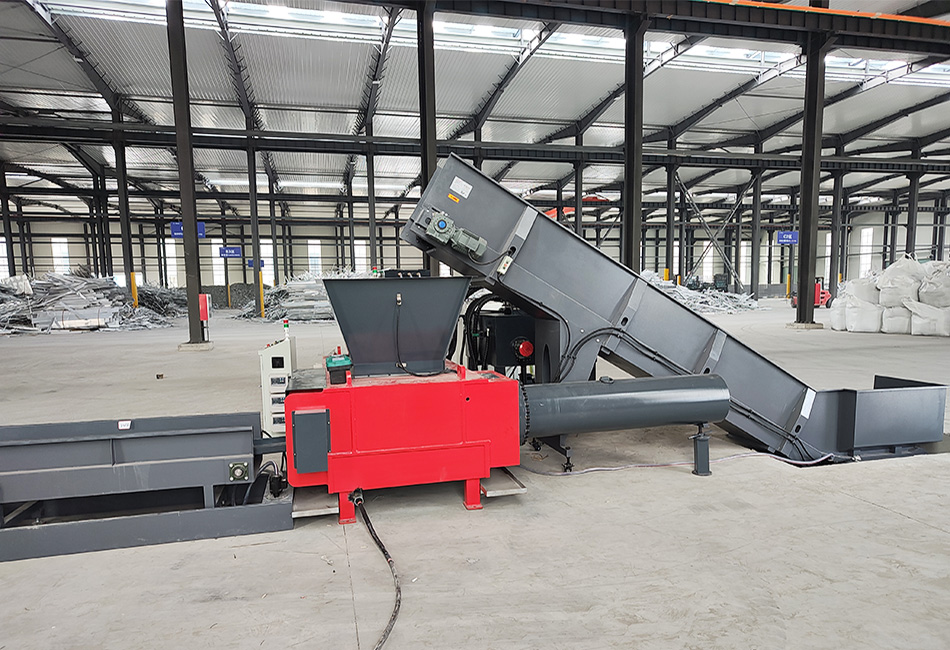
Evaluating equipment requires looking past the exterior paint. You must analyze the internal mechanical capabilities. The physical properties of aluminum demand specific engineering tolerances. These differ greatly from machines designed for paper or plastics.
Aluminum memory causes crushed cans to spring back slightly once the pressure is released. To overcome this, the hydraulic system must deliver immense compaction force. This force is determined by the hydraulic system pressure and the bore size of the main cylinder. A larger cylinder bore operating at high pressure generates the platen force necessary to permanently deform the metal.
Insufficient ram pressure results in expanding bales. These expanding bales snap tying wires or fall apart during handling. The machine must apply enough force to interlock the jagged edges of the crushed cans. This creates a solid block that retains its shape and density long after ejection. Operators should look for machines generating upwards of 50 to 100 tons of pressing force specifically for non-ferrous metals.
Beverage cans are rarely completely empty. When thousands of cans are crushed simultaneously, the resulting liquid runoff is substantial. This mixture of soda, beer, and energy drinks is highly acidic. It is corrosive to unprotected steel and electrical components.
A purpose-built UBC baler must feature integrated liquid management systems. This includes sloped floor plates, deep drip trays, and dedicated liquid collection sumps. These features channel runoff away from the machine's moving parts. The equipment must utilize corrosion-resistant components. Stainless steel liners in the charge box and sealed enclosures for all electronic sensors prevent premature failure from acidic exposure. Operators must drain and flush these sumps regularly to maintain a hygienic work environment.
Manufacturers often advertise a theoretical maximum throughput based on uninterrupted, perfect conditions. Real-world operational capacity is always lower. Calculating true throughput requires factoring in several variables that interrupt continuous processing.
Operators must evaluate these real-world variables against their daily incoming volume. This ensures the selected machine will not become a processing bottleneck.
Aluminum cans often arrive mixed with abrasive dirt, sand, and glass fragments. As the ram pushes this material through the charge box, it acts like sandpaper against the steel walls. Commercial machines must feature replaceable wear liners made from Hardox or AR400 abrasion-resistant steel. These liners protect the main chassis from wear and can be unbolted and replaced during routine maintenance.
Securing the dense aluminum blocks requires high-tensile baling wire. Standard cardboard wire will snap under the expansion pressure of compacted aluminum. Facilities must use 11-gauge or 12-gauge galvanized wire. The galvanization prevents the wire from rusting when exposed to residual beverage liquids or outdoor storage conditions.
Procuring heavy machinery is a long-term infrastructure commitment. The reliability of the equipment is directly tied to the credibility and support structure of the manufacturer.
Selecting the right aluminum can baler manufacturer requires rigorous vetting. Decision-makers must demand transparency regarding warranty terms. You need to know exactly what components are covered and for how long. A robust domestic service network is non-negotiable. Facilities cannot afford weeks of downtime waiting for technicians to arrive from overseas.
Guaranteed replacement parts availability is equally critical. Facilities should request a list of standard wear parts. Verify that the vendor stocks shear blades, nylon wear pads, and limit switches locally. Red flags during the vetting process include a lack of verifiable industrial case studies. Exaggerated throughput claims that defy mechanical logic should also prompt immediate skepticism. Avoid vendors using proprietary hydraulic components that lock the facility into expensive, single-source maintenance contracts.
Daily operational costs dictate the true efficiency of the investment. Energy consumption is a major factor. Facilities must evaluate motor efficiency and the electrical draw of the 3-phase power requirements. Machines equipped with variable frequency drives or on-demand hydraulic pumping consume significantly less electricity than older models with continuously running motors.
Consumable expenses also require careful calculation. High-volume operations consume massive quantities of baling wire or strapping. Operators must track the cost per bale for these materials. Hydraulic fluid degrades over time and requires scheduled replacement. Factoring in the cost of bulk hydraulic oil, replacement filters, and the labor required to perform these fluid changes provides a realistic picture of ongoing operational expenses.
Integrating heavy compaction equipment into a busy recycling environment introduces specific operational and safety risks. Proactive mitigation strategies ensure consistent production and protect facility personnel.
When bulk loading lightweight cans, the material can interlock. It forms a bridge across the hopper opening, preventing cans from falling into the charge box. This bridging causes unplanned downtime as operators must safely clear the blockage.
To mitigate this risk, facilities must specify proper hopper design. Steep angles discourage material hang-ups. Installing mechanical agitators inside the hopper breaks up clumps of cans before they bridge. Strict operator training on optimal feed rates prevents overloading the hopper and minimizes jamming incidents.
The hydraulic system is the heart of the machine. Risks include fluid leaks, system overheating, gradual pressure loss, and structural corrosion caused by unmanaged liquid runoff.
Mitigation requires strict adherence to preventative maintenance schedules. Maintenance teams must conduct routine fluid analysis to detect contamination or viscosity breakdown. Installing temperature monitoring systems prevents the hydraulic oil from overheating during continuous operation. Daily cleaning of the liquid drainage sumps and drip trays prevents acidic beverage residue from corroding the machine's structural steel and hydraulic fittings.
Attempting to scale commercial operations using light-duty crushers or non-commercial, homemade baling rigs is a severe operational error. These machines lack the hydraulic force necessary to overcome aluminum memory. They lack the structural integrity to withstand continuous cyclical stress.
Relying on under-specced equipment leads to frequent breakdowns and severe safety hazards. It produces poorly compacted bales that smelters will reject. Facilities must strictly invest in a commercial-grade aluminum scrap baler or beverage can recycling baler that carries CE or OSHA certifications. These machines are engineered specifically for the rigorous demands of metal compaction.
Industrial compaction equipment presents severe hazards. These include exposure to pinch points, high-pressure hydraulic blowouts, and manual handling injuries. Protecting operators requires layers of safety protocols.
Ensure the equipment features physical interlock switches on all access doors. These prevent the machine from operating if a panel is open. Accessible emergency stop buttons must be located at multiple points around the machine and the feed conveyor. Strict adherence to industrial safety standards eliminates the risk of accidental activation. Mandatory lockout/tagout procedures during maintenance are non-negotiable.
Selecting the correct compaction equipment is a critical infrastructure investment. It dictates a facility's freight efficiency, labor allocation, workplace hygiene, and ultimate scrap valuation. Transitioning from handling loose cans to producing dense, mill-spec bales transforms a logistical bottleneck into a streamlined, highly profitable workflow. Decision-makers must base their final equipment selection on a rigorous matrix of daily throughput requirements, available facility footprint, liquid management needs, and local labor costs. Matching the machine's capabilities to the facility's specific operational realities ensures maximum uptime and profitability.
To move forward effectively, execute the following next steps:
A: Smelters typically require Used Beverage Can bales to achieve a density of 14 to 15 pounds per cubic foot. Bales must be dense enough to withstand transport and handling without breaking apart. This density also minimizes oxidation surface area during the melting process, ensuring a higher yield of pure aluminum.
A: Purpose-built machines feature integrated liquid management systems. These include sloped floor plates, deep drip trays, and dedicated sumps. These components capture and channel acidic beverage runoff away from sensitive hydraulic and electrical parts. This prevents premature corrosion and maintains a hygienic processing environment.
A: Yes, many commercial machines designed for aluminum cans possess the hydraulic force to process other light non-ferrous metals. You can often bale copper wire, aluminum extrusions, and tin cans. Operators must adjust feed rates and ensure the material does not exceed the machine's shear capacity to prevent damage.
A: Vertical machines require manual loading and manual wire tying. They are slower but highly space-efficient. Horizontal machines utilize continuous conveyor feeding and automatic tying systems. This allows for high-volume, continuous processing with minimal operator intervention, making them ideal for large-scale recovery facilities.
A: Light-duty and DIY machines lack the necessary hydraulic pressure to overcome aluminum's structural memory. They produce loose bales that smelters reject. They also lack critical safety interlocks and cannot withstand the cyclical stress of commercial volumes. This leads to frequent breakdowns and severe workplace safety hazards.
A: Preventative maintenance depends on usage hours. Daily checks of liquid sumps, safety interlocks, and hydraulic fluid levels are mandatory. Greasing moving parts should occur weekly. Comprehensive hydraulic fluid analysis and filter replacements typically occur every 1,000 to 2,000 operational hours to ensure peak performance.


 English

