

Views: 0 Author: Site Editor Publish Time: 2026-09-15 Origin: Site


Managing uncompacted aluminum cans hides massive operational hazards and expenses. Loose cans waste valuable floor space and force you to pay high transportation rates just to ship air. Scrap payouts drop significantly for uncompacted material. Sticky beverage residues also create severe facility hygiene issues, quickly attracting bees, wasps, and pests to the sorting floor. Selecting the right equipment requires balancing throughput requirements, labor availability, and facility constraints. You want to avoid over-spending on unnecessary capacity or under-sizing and creating processing bottlenecks. This guide provides a technical evaluation framework. Facility managers, recycling centers, and high-volume beverage operations can objectively assess and select an aluminum can baler based on verifiable specifications. You will learn how to match machine capacity to volume, evaluate essential features, and optimize long-term operational workflows.
Scaling from a few thousand cans per day to multi-ton hourly processing requires precise calculation. You must establish a framework for calculating daily and weekly processing volumes. Raw can counts translate directly into required machine capacity. A cubic yard of whole, loose aluminum cans weighs roughly 50 to 75 pounds. Once compacted, that same cubic yard can weigh well over 500 pounds. This massive shift in density is where you unlock operational value. Peak volume periods should dictate the required cycle time of the machine. For example, beverage consumption spikes heavily during summer months. If your facility processes surges of material during these specific shifts, the equipment must handle that peak without creating a backlog on the tipping floor. A reliable UBC baler prevents these seasonal bottlenecks and keeps your floor clear of loose scrap.
To accurately determine your throughput needs, follow these evaluation steps:
Standard mill requirements dictate specific dimensions and minimum weight thresholds. You need to meet these targets to secure maximum payouts. Producing dense, uniform blocks impacts safe facility stacking. Forklift operators can stack uniform bales three or four high without risking a collapse. Uniform bales maximize trailer loading efficiency. They drastically reduce freight costs per ton. Aluminum mills reject loose, poorly compacted bales or downgrade their value. You must prioritize density to ensure profitability and maintain strong relationships with metal buyers.
Assess your current labor allocation for waste management. Manual loading requires dedicated staff hours. Workers must physically move, load, and cycle the machine repeatedly. Contrast these labor hours with automated systems. Conveyor-fed machines free up staff for other operational tasks. Evaluate how many hours per week your team spends handling scrap. This metric justifies the leap to automated feeding. When labor markets are tight, automating your waste handling becomes a critical operational advantage.
Vertical balers serve low to moderate volume operations. Hospitality venues, small municipalities, and local recycling drop-offs benefit from their compact footprint. They fit into areas with severe space constraints, often requiring less than 50 square feet of floor space. However, they have distinct limitations. You must load them manually, pitching cans into the chamber by hand or with small bins. They feature slower cycle times and deliver lower overall throughput. Operators must tie the bales by hand. This requires workers to feed wire through the floor slots, around the compressed bale, and twist the ties manually while the ram holds pressure. This manual tying process adds five to ten minutes to every single cycle, severely limiting hourly production.
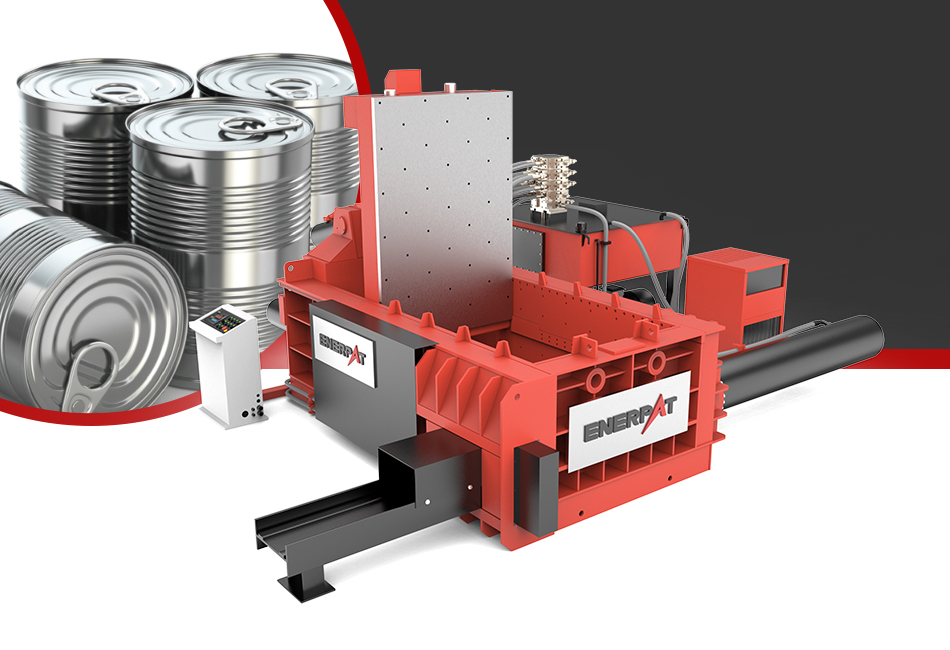
Horizontal closed-door balers handle medium to high volume facilities. They produce denser bales and offer continuous loading capabilities. They integrate easily with existing facility conveyors, allowing for a steady stream of material to enter the chamber. Higher ram pressure ensures uniform compaction. The closed-door design creates a solid steel anvil for the ram to compress against. As the ram pushes forward, a hardened shear blade cuts off any cans sticking up above the chamber, ensuring a clean, flat top to the bale. This results in highly consistent bale weights. Once the bale reaches the desired size, the heavy steel door opens hydraulically, and the ram pushes the finished block out onto a roller table.
High-volume continuous processing demands a hopper feed aluminum baler. Large-scale beverage destruction facilities and major material recovery facilities rely on this design. It eliminates manual batch loading entirely. Operators dump bulk loads via forklift, skid steer, or automated tipper directly into a massive infeed hopper. You can integrate sorting lines and magnetic head pulleys directly above the hopper to separate stray ferrous metals before compaction. This drastically reduces labor hours. The machine cycles automatically as material enters the chamber via photoelectric sensors. The ram runs continuously, shearing and compacting the metal without human intervention.
Briquetting presses offer an alternative approach to traditional wire-tied bales. Standard baling uses wire-tied blocks to hold the material together. Briquetting uses extreme pressure extrusion without any wire. The machine forces the aluminum through a hardened steel die using massive hydraulic force. This creates small, incredibly dense bricks or pucks, usually four to six inches in diameter. Briquetting requires higher capital costs and specialized maintenance. However, smelters often prefer briquettes because they melt faster in the furnace with less oxidation, sometimes yielding a premium price per pound on the commodities market.
Hydraulic press force determines compaction quality. You must understand the relationship between cylinder bore, system pressure, and total platen force. A larger cylinder bore increases the surface area for hydraulic fluid to push against. Higher system pressure, measured in PSI, multiplies this force. We recommend specific baseline pressures to effectively crush aluminum cans. You must overcome material memory. Cans naturally want to spring back after crushing. Sufficient force prevents this spring-back and ensures the bale holds its shape after tying. If the hydraulic system lacks power, the bales will expand and snap the wire ties once ejected from the chamber.
Motor power directly affects cycle times. Horsepower dictates the speed and volume of the hydraulic pump. A larger motor moves fluid faster through the directional valves. This results in a shorter cycle time, allowing the ram to extend and retract rapidly. You must weigh the trade-off between fast cycle times and energy consumption. High-horsepower motors draw significant electricity and generate more heat in the hydraulic oil. If the oil gets too hot, it thins out, causing the system to lose pressure and efficiency. Match the motor size to your actual throughput needs. Do not over-spec the motor if you only process a few tons per day. A properly sized aluminum scrap baler optimizes both speed and power usage, often utilizing soft-start electrical panels to reduce inrush current.
Chamber dimensions and feed openings dictate your workflow. The feed opening size determines your loading method. A wide opening accommodates larger conveyor belts and prevents material bridging. It allows for bulk dumping from tippers without spilling cans onto the floor. Chamber size correlates directly to final bale dimensions and weight. You must match the chamber size to the requirements of your downstream logistics, ensuring the finished bales fit perfectly side-by-side in a standard shipping trailer.
| Technical Specification | Impact on Daily Operation | Ideal Range for High Volume Processing |
|---|---|---|
| Hydraulic Cylinder Bore | Determines total pressing force and final bale density. | 8 to 12 inches |
| System Operating Pressure | Prevents aluminum spring-back and ensures tight bales. | 2,500 to 3,200 PSI |
| Electric Motor Power | Drives hydraulic pump speed and dictates cycle time. | 30 HP to 75 HP |
| Ram Cycle Time | Dictates hourly throughput capacity and material clearing speed. | 20 to 35 seconds |
| Bale Chamber Length | Determines the final weight and dimensions of the extruded block. | 60 to 72 inches |
Processing cans requires specialized drainage infrastructure. A standard machine will fail quickly under these harsh conditions. Sticky, acidic beverage residue destroys hydraulic seals and cylinder rods. It corrodes electrical components and shorts out limit switches if not properly channeled. Built-in drip pans, floor grates, and splash guards are essential. They direct liquid away from sensitive areas and into a central collection sump. Proper drainage also maintains facility hygiene. It mitigates foul odors that build up in the summer heat. It prevents infestations of bees, wasps, and other pests that swarm sugary residues. Without dedicated drainage, the shop floor becomes a sticky, hazardous mess that endangers workers and degrades equipment.
Crushed aluminum acts like sandpaper against standard mild steel. The abrasive nature of the metal causes rapid wear on the machine body, especially on the floor and lower side walls. You must look for replaceable Hardox or AR400 steel wear plates. These abrasion-resistant liners protect the main bale chamber from constant friction. They prevent structural degradation and thinning of the chamber walls. Replacing a bolted-in wear liner takes a maintenance crew a few hours and costs far less than hiring a welder to repair a damaged chamber wall. A used beverage can baler built with these heavy-duty materials will outlast standard equipment by many years.
Automated tying and ejection mechanisms transform high-volume operations. Auto-tie systems eliminate manual wire placement entirely. They use hydraulic inserters and mechanical twisters to secure the bale with high-tensile galvanized wire in seconds. This reduces operator fatigue and drastically speeds up production. Calculate the operational savings of auto-tie systems based on your hourly labor rates and increased throughput. Hydraulic bale ejectors push the finished block out of the chamber and onto a staging table. This reduces operator strain. It improves safety compared to manual extraction methods. Operators no longer need to pry heavy bales out with pry bars, chains, or forklift straps, which frequently leads to workplace injuries.
Evaluate the track record of the manufacturer carefully before committing capital. Look for decades in business and specific engineering expertise in non-ferrous metals. Request verifiable case studies in beverage recycling and scrap yard deployments. A reputable aluminum baler manufacturer will gladly provide references from facilities running similar volumes. Speak with current users about machine reliability under heavy loads. Ask about their experience with customer service and technical troubleshooting. Ensure the manufacturer builds control panels using non-proprietary, off-the-shelf components like standard Allen Bradley or Siemens PLCs. This prevents you from being locked into expensive, proprietary circuit boards that take weeks to source.
Service Level Agreements and parts availability keep your operation running smoothly. Equipment downtime kills facility profitability. You need domestic or easily accessible replacement parts. Common wear items like hydraulic hoses, cylinder seals, limit switches, and relays should ship overnight. Evaluate the manufacturer's network of certified service technicians. Can they dispatch a qualified hydraulic mechanic to your facility quickly? Local support minimizes production interruptions. If a main directional control valve fails during a peak processing week, you need a replacement immediately, not sitting on a cargo ship for several weeks.
Understand exactly how to read and enforce an equipment warranty. Distinguish between structural, hydraulic, and electrical coverage periods. Structural warranties often last several years. They cover the heavy steel frame, ram carriage, and main welds against cracking or catastrophic failure. Hydraulic warranties cover the main pumps, manifolds, and cylinders. Electrical warranties cover the PLCs, touchscreens, and electric motors. Ensure you know exactly what is covered and for how long. Read the fine print regarding preventative maintenance requirements. Failing to change hydraulic oil on schedule, or neglecting to grease the auto-tie mechanisms, often voids the manufacturer's warranty entirely.
Calculate the payback period based on direct labor reduction. Automated systems require a larger initial investment but slash daily labor hours. You no longer need three guys manually pitching cans and tying wires. Optimized freight provides massive, recurring savings. Dense bales allow you to max out commercial trailer weight limits. You ship fewer trucks per month to the mill. If you ship loose cans in a walking floor trailer, you might only fit a fraction of the legal weight limit. Dense bales allow you to load up to the legal highway limit, drastically reducing your freight cost per pound. Increased scrap value also accelerates your payback period. Mills pay a premium for dense, uniform material that they can feed directly into their furnaces.
Estimate annual electrical costs based on motor size and active operating hours. Larger motors consume more power, but they process material faster, meaning the machine runs for fewer hours overall. Budget strictly for preventative maintenance. You must schedule regular hydraulic fluid analysis and complete fluid changes. Filter replacements keep the hydraulic system clean and protect the expensive main pump from metal shavings. Factor in the cost of wire ties for your daily production. High-tensile galvanized wire is an ongoing consumable expense that you must track and order in bulk to secure the best rates.
Producing mill-ready bales allows you to bypass local middlemen and scrap brokers. You can sell directly to regional aluminum buyers and smelters. This maximizes your revenue per ton. Brokers take a significant cut of your profits when you sell loose cans or low-density bales. Dense, uniform bales give you direct access to higher market rates. By controlling the density, cleanliness, and quality of your bales, you control your position in the recycling supply chain and dictate better terms with buyers.
Commercial equipment requires robust, industrial electrical infrastructure. You need dedicated 3-phase power for a commercial-grade aluminum can baler machine. Single-phase power cannot drive large hydraulic motors efficiently and will burn out components. Plan for dedicated circuits, heavy-duty wiring, and accessible safety disconnects. Consult a licensed industrial electrician early in the facility planning phase. Ensure your building panel has adequate amperage available to handle the motor's startup draw. Upgrading a facility electrical panel to accommodate a large motor can add significant time and expense to your installation schedule if not planned properly.
Calculate the total footprint required for the installation. Account for the physical machine dimensions, the infeed conveyor footprint, and loading clearance for skid steers. You need safe, designated storage areas for uniform bale stacking. Designate clear operator safe zones with painted floor lines. Plan for upstream integration. Leave adequate space for feed conveyors, sorting platforms, or magnetic separators. Proper spatial planning prevents workflow bottlenecks and forklift traffic jams. Heavy machines also require a reinforced concrete pad. A standard four-inch warehouse floor will crack under the weight and vibration of a twenty-ton machine. You need an eight-inch reinforced concrete pad to prevent the equipment from shifting during operation.
OSHA compliance demands strict operator training and safety protocols. Implement rigid lockout/tagout procedures for all maintenance tasks. Ensure all pinch points, shear blades, and moving conveyor parts have proper steel guarding. Develop standard operating procedures for clearing material jams safely. Never allow operators to reach into a pressurized chamber or climb into a hopper without fully de-energizing the system. Safety must dictate every aspect of your daily workflow. Document all training sessions, maintain maintenance logs, and conduct regular safety audits to maintain compliance and protect your workforce from severe injury.
The optimal machine is a strict calculation of daily volume, labor costs, and target bale density. It is never just about finding the lowest purchase price. You must match the equipment to your specific operational reality. Under-sizing leads to labor bottlenecks and floor backups, while over-sizing wastes capital and electricity.
Use a clear decision matrix for shortlisting. Choose vertical models for tight spaces and low volume. Select horizontal closed-door models for medium volume. Invest in hopper-fed systems for maximum automation, upstream integration, and high volume.
Take the following steps to finalize your equipment selection:
A: A UBC machine features specialized liquid drainage systems to handle sticky beverage residue. It utilizes higher platen pressure to prevent aluminum spring-back. Furthermore, it incorporates abrasion-resistant steel liners in the chamber to withstand metal-on-metal friction. Standard cardboard balers lack these features and will degrade rapidly if used for metal.
A: The investment depends entirely on machine type, capacity, and automation levels. Small vertical models require a lower initial outlay. Automated horizontal systems demand a higher capital expenditure due to larger hydraulics and conveyors. You must also factor in installation, freight, and optional features like auto-tie mechanisms when budgeting.
A: Mills typically require high-density bales that maximize a 53-foot trailer's legal weight limit. Bales usually need to weigh between 800 and 1,200 pounds. Achieving this density ensures you receive the maximum payout per ton and reduces your overall freight expenses by shipping fewer trucks.
A: You need a hopper system when manual loading becomes cost-prohibitive. If your facility processes several tons of cans daily, manual loading wastes excessive labor hours. A hopper allows for bulk dumping via forklift or conveyor, justifying the upgrade through significant labor savings and continuous processing.
A: These machines feature built-in drip pans, splash guards, and drainage ports. They channel sticky, acidic liquid away from sensitive electronics and hydraulic seals. The liquid flows into a designated collection vessel or floor drain. This prevents equipment corrosion and eliminates severe pest infestations on the shop floor.
A: Routine maintenance includes conducting hydraulic oil analysis and changing filters. You must regularly grease all moving parts and inspect the abrasion-resistant wear pads. Operators must clean out sticky beverage residue daily to prevent sensor failure, protect cylinder seals, and maintain strict facility hygiene.


 English

