

Views: 0 Author: Site Editor Publish Time: 2026-09-15 Origin: Site


Inefficient scrap metal handling directly degrades profit margins. Inflated transportation costs eat into revenue. Wasted floor space creates logistical bottlenecks. Suboptimal furnace utilization slows down melting cycles. Every cubic yard of loose scrap shipped represents lost payload efficiency. Foundries demand dense, uniform bales to maximize melt yields. Facility managers and procurement teams face a constant challenge. You must balance throughput requirements against material variability and capital expenditure when selecting heavy-duty compaction equipment. Choosing the wrong compaction system leads to excessive downtime and maintenance headaches. This guide provides a technical framework for evaluating compaction machinery. We will help you match machine specifications to specific material streams. You will learn how to analyze hydraulic performance, assess facility constraints, and mitigate implementation risks. Proper equipment selection transforms scrap from a logistical burden into a highly optimized revenue stream.
Successful baling operations depend on strict performance metrics. You must evaluate the cost per ton processed. Transport payload optimization drives immediate freight savings. Safety compliance prevents costly operational shutdowns. Loose scrap is inherently inefficient. It consumes massive amounts of facility square footage. It requires constant loader intervention. Compaction solves these logistical failures. High-density bales stack neatly. They allow you to maximize truck weights before hitting volume limits. This reduces the total number of freight trips required.
Let's look at a practical field example. A standard 53-foot flatbed trailer has a legal payload limit of roughly 45,000 pounds. When loading loose, unprepared sheet iron, you often hit the trailer's physical volume limit at just 20,000 pounds. You pay for a full truckload but ship half empty. Processing that same material through scrap metal balers changes the math. You produce dense, uniform blocks. You easily hit the 45,000-pound weight limit while only using half the trailer's deck space. You instantly cut your freight frequency in half.
Specific industries dictate distinct equipment requirements based on volume and material rigidity. Automotive scrap processing involves heavy, abrasive materials. End-of-life vehicles require massive shear force to process frames and chassis components. Machinery and equipment scrap presents similar challenges. You deal with thick steel plates and structural components. These materials demand high-pressure hydraulic systems. By contrast, stamping plants produce uniform, high-volume offcuts. These facilities prioritize rapid cycle times over extreme crushing force. Processing frequency dictates your required throughput capacity.
Furnace efficiency relies heavily on proper bale density. Foundries penalize suppliers for loose, low-density scrap. Loose material exposes excessive surface area to oxygen during the melting process. This causes severe oxidation losses. You lose valuable metal to slag. High-density bales sink quickly into the melt pool. This minimizes oxidation. Dense bales also maximize furnace area utilization. You can fit more weight into each charge. Loose scrap traps oils and cutting fluids. Compacting the metal squeezes out these combustible fluids. This prevents dangerous fire hazards during smelting.
Space reclamation offers immediate operational benefits. Loose scrap piles sprawl across yards. They block traffic lanes. They create tripping hazards. Transitioning to a baled output transforms your yard logistics. You reclaim valuable square footage for other operations. Forklifts can easily move and stack uniform bales. Inventory tracking becomes simple. You count bales instead of estimating pile weights. Streamlined logistics reduce loader fuel consumption and operator fatigue.
| Metric | Loose Scrap Handling | Baled Scrap Handling |
|---|---|---|
| Transport Payload | Volume-limited (often 40-50% of weight capacity) | Weight-limited (100% payload utilization) |
| Yard Space Required | Extensive (sprawling piles) | Minimal (vertical stacking) |
| Furnace Melt Yield | Low (high oxidation loss) | High (rapid submersion, low oxidation) |
| Loader Fuel Consumption | High (constant material pushing) | Low (moving consolidated blocks) |
A single action baler utilizes one hydraulic ram. It compresses material in a single direction against a fixed wall or an ejection door. The mechanism is straightforward. You load the chamber, activate the ram, and compress the scrap. This design minimizes moving parts. It simplifies hydraulic routing and electrical controls.
These machines suit lower-volume facilities. They work well for light aluminum extrusions or copper wire. They fit operations where manual tying remains operationally feasible. Smaller recycling yards often deploy single action models for specialty metals. The operational trade-offs are clear. You benefit from lower initial capital expenditure. Maintenance requires less specialized knowledge. However, you must accept more manual labor. Single ram systems yield lower bale densities compared to multi-ram configurations.
A lid type scrap metal baler features a top-loading box equipped with a heavy-duty closing lid. This lid provides the first stage of compression. You load oversized material into the chamber using a material handler. The heavy lid lowers, crushing the scrap down into the box. Once closed, lateral rams complete the compaction cycle.
This design excels at handling bulky, oversized scrap. White goods, automotive skeletons, and large sheet metal require this pre-crushing action. The lid acts as a massive shear, folding irregular shapes into the chamber. The primary trade-off involves cycle speed. The multi-step process results in slower cycle times compared to continuous feed systems. However, the lid provides superior containment. It traps flying debris during the initial crush, enhancing yard safety.
A hopper type scrap metal baler utilizes a gravity-fed or conveyor-fed loading system. Material drops continuously into the compression chamber. A shear blade on the main ram cuts off excess material as it moves forward. This enables continuous or semi-continuous operation.
These machines dominate environments producing uniform, loose scrap. Stamping plants, machine shops producing turnings, and facilities processing metal clippings rely on hopper systems. High throughput and automation are the primary goals. You can integrate these balers directly into production lines. The operational trade-off centers on material sizing. You must ensure consistent material dimensions. Oversized pieces will cause bridging. Bridging jams the hopper and halts production.
A two ram baler separates the compression and ejection phases. The primary ram gathers and compresses the material against a fixed wall. The secondary ram then activates at a right angle. It pushes the finished bale through an automated tying tier and out of the machine.
This configuration offers unmatched versatility. Multi-material facilities rely on two ram systems. You can switch between processing light metals, plastics, and corrugated cardboard with minimal adjustment. The automated tying system drastically reduces labor requirements. The trade-off involves maximum density. While highly versatile, a two ram system may not achieve the extreme density of a dedicated triple compression machine when processing heavy structural steel.
A triple compression metal baler represents the pinnacle of scrap densification. The machine utilizes three directional rams. A top lid or ram pushes down. A side ram pushes inward. Finally, a longitudinal main ram pushes forward. This three-axis compaction squeezes every void out of the material.
Heavy industrial scrap demands this level of force. Structural steel beams, heavy pipe, and thick plate require triple compression. High-volume recycling centers use these machines to produce dense, foundry-ready bales. The operational trade-offs are significant. You face high initial capital expenditure. The complex hydraulic system requires rigorous maintenance. However, this machine yields the lowest transport cost per ton by maximizing payload weights.
Balers generally fall into vertical or horizontal configurations. Vertical balers compress material top-down. They are highly space-efficient. Small operations use them for light aluminum cans or copper wire. You load them by hand. Horizontal balers compress material laterally. They handle industrial-scale processing. They require significant floor space. You feed them via conveyors, grapples, or magnetic loaders. Horizontal machines deliver the throughput required for serious metal recycling.
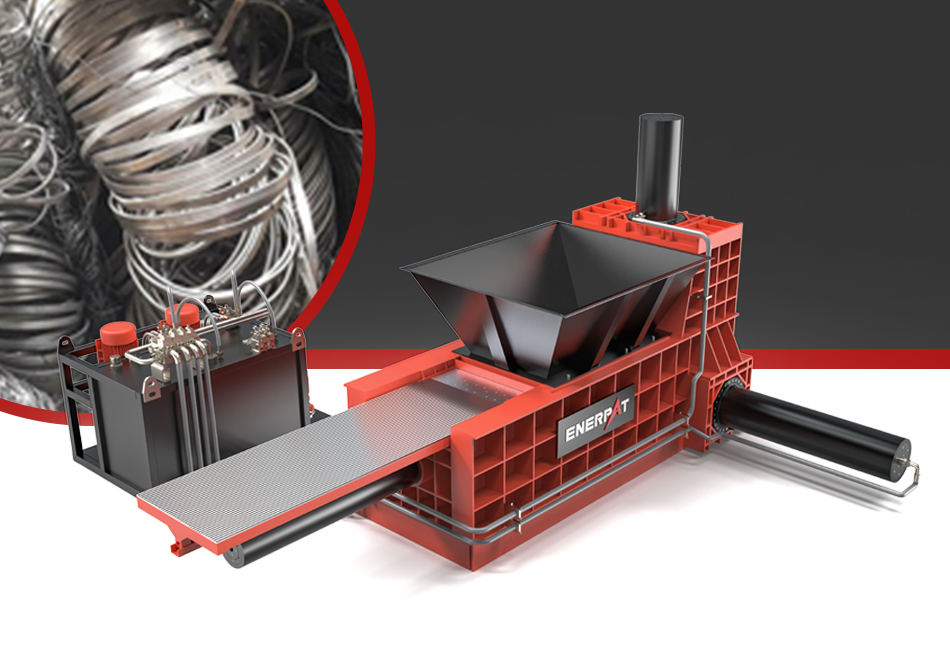
Ferrous materials possess high tensile strength. Steel and iron are notoriously abrasive. Processing these metals destroys inadequate equipment. You must specify a machine built for brutal conditions. Primary use cases include processing end-of-life vehicles and decommissioned industrial assets. Automotive scrap contains high-strength steel alloys. Machinery scrap includes thick cast iron components.
A true ferrous metal baler requires specific engineering upgrades. You need high-shear blades to cut through structural members. The compression chamber must feature replaceable Hardox wear plates. Standard steel liners will gall and tear under the abrasion of sliding scrap. The hydraulic system must deliver extreme pressure. Processing heavy steel often requires force exceeding 300 tons. Anything less will stall the rams or produce loose, unacceptable bales.
You must also consider the cylinder design. Ferrous baling requires heavy-duty trunnion-mounted cylinders. These absorb the shock loads generated when shearing heavy steel. Standard clevis-mounted cylinders will bend or break under these extreme forces. The main ram face must feature a serrated design to grip the material and prevent it from rolling upward during compression.
Non-ferrous materials behave differently. Aluminum extrusions, copper wire, and brass fittings are highly malleable. They feature lighter gauges. However, they hold significantly higher market value per pound. Processing non-ferrous metals requires a different engineering approach. You do not need 300 tons of crushing force. Instead, you need speed and precision.
A dedicated non ferrous metal baler focuses on cycle speed. Faster rams increase tons-per-hour output. Automated tying systems become mandatory. Manual tying slows down high-speed production lines. You must prevent cross-contamination. Mixing copper into an aluminum bale degrades its value. Non-ferrous balers often feature clean-out doors. Operators must easily sweep the chamber between different material batches.
Hydraulic systems on non-ferrous machines prioritize flow rate over maximum pressure. High-volume pumps fill the cylinders rapidly, reducing the dry cycle time. The shear blades require tighter tolerances. Thin aluminum sheet will fold and jam between loose blades instead of cutting cleanly. You must maintain precise blade gaps to ensure clean shearing action.
Procurement teams often miscalculate true throughput. Do not rely solely on the manufacturer's stated cycle time. Dry cycle time means nothing in the field. You must calculate true tons-per-hour. This requires analyzing your specific loading methods. A grapple takes longer to load a chamber than a continuous conveyor. Include loading time, ram extension, compression hold time, bale ejection, and tying. Only then can you determine actual production capacity.
Consider the material density before compaction. Light aluminum turnings take up massive volume but weigh very little. You might cycle the machine ten times to produce one heavy bale. Heavy steel punchings fill the weight requirement in a single cycle. Your throughput calculations must account for the specific bulk density of your incoming scrap stream.
The hydraulic system acts as the heart of the baler. Metal compaction generates massive amounts of heat. Hydraulic oil heats up rapidly during continuous operation. Heat degrades fluid viscosity. Poor viscosity destroys pump seals and causes internal bypassing. You must evaluate the cooling system. High-capacity air or water coolers are mandatory for multi-shift operations.
Filtration standards also matter. Abrasive metal dust inevitably enters the system. Sub-micron filtration protects expensive directional valves. You should specify offline kidney-loop filtration systems. These run continuously, even when the main motors are off, ensuring the oil remains perfectly clean. Specify variable frequency drives on the main motors. These drives reduce motor speed during idle phases. This drastically cuts energy consumption and reduces heat generation.
Labor shortages plague the recycling industry. You must assess the trade-off between manual and automated systems. Manual balers require operators to thread wire and secure ties. They use electric hot melt systems or manual iron buckles. This exposes workers to pinch points and slows production.
Fully automated systems utilize programmable logic controllers. Auto-wire tie mechanisms loop and twist high-tensile wire in seconds. While automated tiers increase initial costs, they eliminate a dedicated labor position. They also guarantee consistent bale integrity during rough transport. You must evaluate the wire tier design. Look for systems with easily accessible wear parts. The twisting pinions and cutting knives require regular replacement. If they are buried deep inside the machine frame, maintenance will take hours instead of minutes.
Heavy balers require serious civil engineering. You cannot place a 50-ton machine on standard warehouse concrete. The repetitive impact of metal compression creates severe dynamic loads. You must pour reinforced concrete pads. These pads often require heavy rebar grids and specific depth requirements. Vibration dampening materials prevent structural damage to surrounding buildings.
Analyze your facility footprint carefully. You need adequate clearance for loaders to maneuver. Conveyors require specific incline angles. Maintenance teams need space to pull hydraulic cylinders or change wear plates. If you place the machine too close to a wall, you will have to move the entire baler just to replace a main ram cylinder. Plan your layout with maintenance access as the primary constraint.
Scrap yards contain inherent dangers. Baling operations amplify these risks. You must implement strict worker-centric safety protocols. Lockout/tagout procedures are non-negotiable. Maintenance personnel must physically lock the main power disconnect before entering the compression chamber.
Guarding is mandatory. Pre-crushing phases often eject flying metal debris. Install heavy-duty lexan shields or steel mesh around the loading zone. Eliminate pinch points around the ejection door and tying tier. Comprehensive operator training programs ensure safe manual and automated operation. Operators must understand how to clear jams safely without bypassing safety interlocks.
Downtime destroys profitability. You must conduct a realistic assessment of wear-part replacement schedules. Hardox liners wear thin. Shear blades dull and require flipping or replacement. High-pressure hydraulic hoses eventually fatigue and burst. You must stock critical spares on-site. Do not wait for a hose to blow before ordering a replacement.
Evaluate local OEM support. If the control system fails, you need a technician who understands the proprietary software. Relying on overseas support for critical troubleshooting extends downtime from hours to weeks. Establish a preventative maintenance schedule based on operating hours, not calendar days. Change hydraulic filters, grease trunnion bearings, and inspect shear blade gaps strictly according to the hour meter.
| Component | Inspection Frequency | Replacement Indicator |
|---|---|---|
| Shear Blades | Weekly | Rounded edges, poor cutting performance |
| Hydraulic Filters | Monthly | Pressure drop indicator triggered |
| Wear Plates (Liners) | Quarterly | Thickness reduced by 30%, deep gouges |
| Wire Tie Pinions | Bi-Weekly | Inconsistent wire twists, broken ties |
There is no universal best baler on the market. Your selection must be strictly dictated by your specific material type, required throughput volume, and facility constraints. Over-specifying wastes capital. Under-specifying destroys the machine and halts production. Procurement teams must prioritize OEMs that offer transparent cycle-time guarantees. Demand verifiable hydraulic component sourcing from reputable brands. Ensure robust aftermarket support exists in your region.
Take the following actions to optimize your baler procurement process:
A: A single action baler uses one ram to compress material against a fixed wall, usually requiring manual tying. A two ram baler uses a primary ram to gather and compress the scrap, and a secondary ram to eject the bale through an automated tying tier. Two ram systems offer higher throughput and versatility.
A: No. Processing heavy steel in a machine designed for non-ferrous metals causes severe damage. The hydraulic system lacks the necessary crushing force. The structural frame will fatigue. The chamber liners will gouge and tear. Doing so will immediately void manufacturer warranties.
A: The heavy closing lid acts as a physical barrier during the initial pre-crush phase. When processing bulky items like car shells, metal under extreme pressure can snap and become a projectile. The closed lid contains this flying debris within the chamber, protecting operators and yard personnel.
A: These massive machines require specialized civil engineering. You must pour thick, reinforced concrete pads designed to handle extreme dynamic loads and repetitive impacts. Many installations require custom pit designs to lower the loading height and specialized vibration isolation pads to protect surrounding structures.
A: Calculate ROI by combining three primary metrics: freight savings from maximized truck payloads, increased revenue from foundries paying premiums for high-density bales, and labor cost reductions achieved by transitioning to automated tying systems. Subtract operational expenses like power and maintenance from this total.
A: Ideal density depends on the specific furnace, but generally ranges between 100 to 150 lbs per cubic foot for steel. High density minimizes the surface area exposed to oxygen. This reduces oxidation loss, maximizes furnace area utilization, and speeds up the overall melting cycle.


 English

