


Views: 137 Author: Site Editor Publish Time: 2026-08-03 Origin: Site


Transitioning bulk materials from processing to packaging often creates a severe operational bottleneck. Facilities processing biomass, animal bedding, or recyclables struggle to maintain throughput during this critical phase. Manual or semi-automated bagging introduces high labor costs and frustrating line pacing issues. You also face inconsistent bale weights. This disrupts freight logistics and reduces profitability across your supply chain. We will explore how to evaluate and integrate these automated systems effectively. You will learn a proven framework for selecting the right equipment for your facility layout. Our objective is to help you maximize your operational efficiency while minimizing production downtime. Proper integration ensures a seamless material flow from upstream processing to final distribution. Managers face immense pressure to modernize legacy setups today. This guide provides actionable insights for an optimized, highly profitable transition.
Integrating an automatic bagging press standardizes bale density and reduces packaging material waste by up to 15%.
Choosing between vertical and horizontal configurations depends strictly on factory footprint and material rebound characteristics.
Scale weighing precision is the critical metric for avoiding product giveaway and compliance issues in commercial distribution.
Successful implementation requires validating PLC handshakes between the new press and existing infeed conveyors.
Standalone balers require constant human intervention. Operators manually load hoppers, tie wires, and move finished bales. This traditional approach limits your daily output. Moving toward continuous, production line baling changes everything. It connects your primary processing equipment directly to the packaging phase. The system runs steadily. It eliminates the stop-and-go delays found in manual operations. You achieve higher throughput and predictable scheduling.
Understanding the mechanics behind these systems is crucial. A bagging press machine performs two actions simultaneously. It compacts loose materials and seals them directly into plastic gusseted bags. This applies to wood shavings, silage, rags, or hemp. The hydraulic ram forces the loose product into a densely packed block. Then, the machine pushes this block into a waiting plastic bag. Finally, it heat-seals the opening. This closed-loop process locks in material integrity. It prevents moisture loss in silage and controls dust in wood shavings.
You cannot just drop a new machine onto the factory floor. You must meet specific success criteria for proper integration. Consider these fundamental targets:
Matching output capacity: Your upstream shredders or conveyors process a specific tonnage per hour. Your new press must handle this exact volume to prevent material backups.
Achieving continuous loops: The system should run smoothly with minimal human intervention. Operators should only need to reload bag magazines or monitor alerts.
Standardizing dimensions: Finished bales must feature uniform sizes. This optimizes pallet stacking and maximizes space inside freight containers.
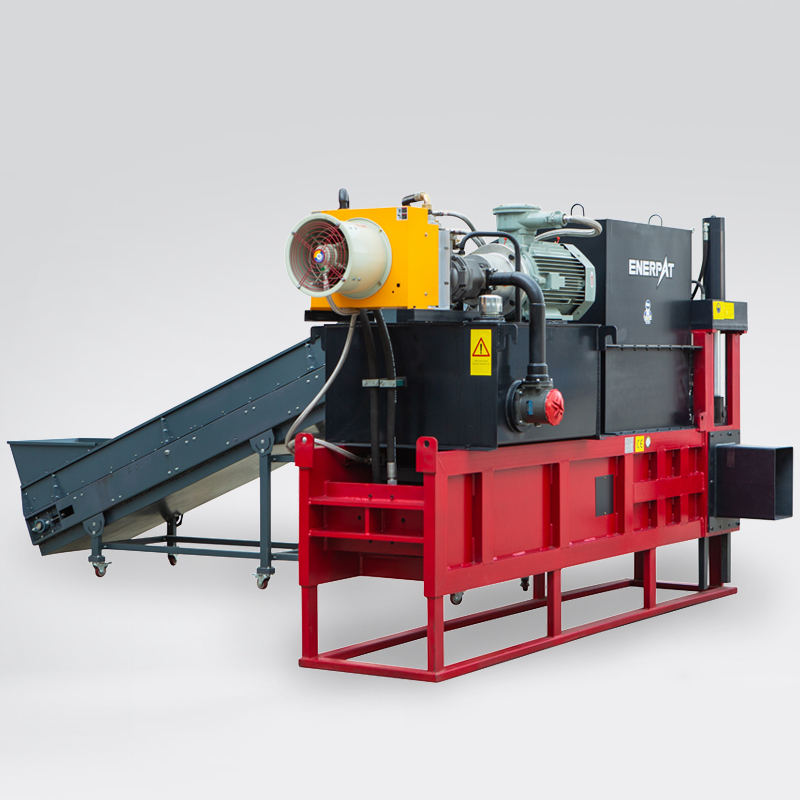
Integrating an automatic bagging press requires choosing the right structural architecture. Manufacturers primarily offer two distinct configurations. Your choice dictates how material flows through your building.
Vertical systems utilize gravity to feed material into the compaction chamber. The ram presses downward from the top.
Best for: Facilities facing strict floor space limits. They excel with free-flowing materials like animal bedding or grain hulls. Gravity assists the initial settling process.
Limitations: They generally offer lower maximum throughput compared to horizontal counterparts. They also require significant ceiling clearance. You must ensure your roof height accommodates the fully extended hydraulic cylinders.
Horizontal systems push material sideways. The hopper sits above, but the compaction happens on a flat plane.
Best for: High-capacity operations. They integrate seamlessly into flat conveyor lines. Biomass plants and large-scale recycling centers prefer this style.
Advantages: They support continuous feed capabilities. They also generate much higher compression forces. This makes them ideal for high-rebound materials like textiles or synthetic fibers.
Common Mistake: Many facility managers underestimate ceiling clearance. Always measure the maximum vertical stroke of the hydraulic cylinder before ordering a vertical model.
Configuration Decision Matrix
Assessment Criteria | Vertical Press Configuration | Horizontal Press Configuration |
|---|---|---|
Footprint Requirement | Minimal floor space, high ceiling needed | Large floor space, standard ceiling |
Material Rebound | Low to medium rebound handling | Excellent high-rebound handling |
Throughput Capacity | Moderate (typically batch processing) | High (continuous flow processing) |
Target Bale Weight | Small to medium (1kg - 15kg bags) | Medium to large (15kg - 25kg+ bags) |
Review your material type, target bale weight, and available footprint. Use this framework before committing to a specific form factor.
When assessing an industrial baling press, you must look beyond basic dimensions. High-volume operations demand durable internal components and precise software.
Integrated Scale Weighing: Load cell precision is vital. Accurate dosing prevents product giveaway from overfilling bags. It also prevents compliance failures caused by underfilling. Look for systems offering automatic zero-tracking. This feature recalibrates the scale after every cycle. It compensates for dust buildup on the weighing pan.
Hydraulic System Reliability: Focus on the pump and valve infrastructure. Look for standard, off-the-shelf components. Brands like Rexroth or Vickers represent industry benchmarks. Avoid machines utilizing proprietary valves. Proprietary parts cause severe maintenance lock-in. You will face longer lead times during critical breakdowns.
Sealing Technology: Evaluate the heat-sealing mechanisms designed for plastic bags. The system must support adjustable temperature controls. Different film thicknesses require distinct thermal settings. A high-quality impulse sealer prevents plastic from melting onto the heating wire. It ensures a clean, airtight closure.
Automation Level & Labor Requirements: True automation reduces headcounts. Advanced presses require only one operator per shift. This person handles bag magazine reloading and system monitoring. If a machine requires workers to hold bags open manually, it does not meet modern automation standards.
Best Practice: Always request a load cell calibration certificate during the commissioning phase. Confirm the scale meets local legal metrology standards if you sell products by weight.
Installing heavy machinery disrupts normal operations. You must anticipate technical hurdles to protect your production schedule. Addressing these realities early prevents budget overruns.
Material bridging poses a major risk at the infeed hopper. Fluffy or damp materials often clump together. They block the throat of the press. You must design the transition chute carefully. The connection between the upstream conveyor and the press hopper needs precise angles. Incorporating mechanical agitators or vibratory plates helps maintain continuous flow.
Modern production lines rely on synchronized data. The master line programmable logic controller (PLC) governs the entire factory. Ensure your new press communicates seamlessly with this existing network. Look for standard industrial protocols like Profinet or Ethernet/IP. Proper handshakes prevent the conveyor from dumping material when the press hopper is full.
Do not expect a plug-and-play experience. Realistic timelines dictate a minimum of 3 to 5 days of complete line interruption. You must schedule time for anchoring the structural frame. Electricians need time to install high-voltage drops. Technicians require uninterrupted hours for hydraulic commissioning and fluid flushing.
Raw materials rarely remain perfectly consistent. Changes in moisture content or particle size affect compaction. Damp sawdust behaves differently than dry sawdust. Acknowledge these variables upfront. You will need to recalibrate compaction pressure and weigh scales seasonally. Train your operators to adjust PLC recipes when material textures shift.
Choosing an OEM bagging machine partner demands rigorous vetting. A shiny brochure does not guarantee operational reliability. Focus on manufacturing standards and post-installation logistics.
A trustworthy OEM demonstrates confidence through transparency. They will actively request raw material samples from your facility. They use these samples for factory acceptance testing (FAT). This testing happens before they finalize a quote. Walking through a documented FAT ensures the equipment handles your specific product density. Never purchase a high-capacity machine without physical material trials.
Industrial machinery presents severe crush hazards. Verify all local safety certifications. Look for CE, UL, or CSA markings on the electrical panels. Inspect the physical safety infrastructure. The equipment must feature hardwired emergency stop circuits. Light curtains should guard the bag discharge zones. Safety interlocks must prevent the access doors from opening while the hydraulic pump runs.
Hardware eventually wears out under heavy use. Evaluate the availability of regional service technicians. Ask about guaranteed response times for emergency visits. Furthermore, scrutinize the promised lead times for critical wear parts. Sealing wires, Teflon tape, and hydraulic cylinder seals need regular replacement. A vendor lacking local spare parts inventory will cost you days of lost production.
A bagging press machine represents a transformative CapEx investment for high-volume facilities. It pays off rapidly through direct labor reduction and significant freight optimization. However, you only realize these gains if your upstream line feeds the system efficiently.
Start your transition with data. Audit your current material throughput rates today. Define your target bale dimensions based on your primary shipping pallets. Once you clarify these metrics, you can engage manufacturers for custom layout proposals. Prioritize seamless PLC integration and robust hydraulic components to guarantee a durable, long-term solution.
A: With routine hydraulic maintenance and regular wear-part replacement, these machines are highly durable. Structural frames and primary cylinders typically last 10 to 15 years in continuous, multi-shift production environments. Consistent oil changes and filter replacements drastically extend pump life.
A: Yes, they offer excellent versatility. The machine must feature programmable logic controller (PLC) recipes. Operators use these recipes to adjust compression force and scaling parameters instantly. This allows you to switch smoothly between distinct material densities, like moving from wood chips to textile rags.
A: Most operate reliably with standard pre-made gusseted plastic bags. Some advanced models use continuous tubular film for form-fill-seal processes. However, you must match the plastic thickness (measured in microns) to the material's expansion force. Proper thickness prevents the bags from bursting during storage or transit.


 English

