

Views: 0 Author: Site Editor Publish Time: 2026-09-15 Origin: Site


Unmanaged high-volume cardboard waste creates massive bottlenecks in distribution centers, manufacturing plants, and large retail hubs. Floor space disappears under mountains of empty boxes. Forklift operators waste hours navigating around debris instead of moving product. Hauling fees skyrocket as you pay to transport uncompacted air to the landfill. When your facility generates over 50 tons of cardboard per month, standard vertical balers fail to keep up. Their manual loading requirements and slow cycle times drag down overall productivity. You need a continuous-feed solution to handle the influx.
A horizontal cardboard baler solves this operational bottleneck directly. It automates the compaction process, handles bulky uncrushed boxes, and produces dense, mill-ready bales. This equipment shifts your waste management strategy from a heavy operational expense to a streamlined process that generates consistent recycling revenue. Upgrading your infrastructure eliminates manual feeding logistics and keeps your core operations running without interruption.
High-volume waste processing demands continuous material flow. The top-loading hopper serves as the primary intake zone for the machine. It features a massive opening designed to accept bulky, unbroken boxes directly from your facility floor. You do not need to pre-shred materials. You do not need employees manually flattening corrugated containers. The hopper funnels everything directly into the compaction chamber.
Facilities integrate these hoppers with various automated feeding systems to match their specific workflows. Pit conveyors allow floor-level loading. Operators simply push waste into the pit, and the steel belt carries it up to the hopper. Above-ground slider bed conveyors work well for manual sorting or skid-steer loading. Forklift tippers grab entire gaylord boxes or rolling carts and dump them directly into the machine. For manufacturing plants generating continuous trim waste, pneumatic cyclone systems blow material straight into the hopper through overhead ductwork. These integration options eliminate the physical strain of manual loading and keep material moving.
Inside the hopper, photo-eye sensors monitor the material level. When the cardboard blocks the sensor beam, the programmable logic controller (PLC) automatically triggers the compaction cycle. This means the machine only runs when necessary, saving electricity and reducing wear on the hydraulic components.
Once material drops into the chamber, the horizontal extrusion process begins. A massive hydraulic cylinder drives the main ram forward. It compresses the cardboard from the side against the previously formed bale or a heavy steel door. This horizontal action allows for a much longer stroke and higher compaction ratios compared to vertical models.
Shear blades play a critical role in this cycle. Mounted on the top edge of the ram and the frame of the hopper, these hardened steel blades slice through oversized materials that hang over the chamber edge. This cutting action prevents jams. It ensures the ram can complete its stroke without stalling. Maintaining sharp shear blades guarantees continuous throughput and protects the hydraulic system from over-pressurization. If blades become dull, the hydraulic fluid heats up, and the machine loses efficiency.
Ram force dictates the final density of your bales. System pressure ratings typically range from 2,500 to 3,000 PSI, driven by 20HP to 50HP electric motors. High ram force squeezes the air out of rigid corrugated board. It creates tight, uniform bales that stack easily and maximize truckload weights.
Wire tying secures the compacted material. An auto tie cardboard baler performs this task entirely without operator intervention. When the bale reaches the desired length, the machine pauses the feeding cycle momentarily. The main ram extends fully and holds pressure against the cardboard. Automated inserter arms shoot high-tensile wire through guide slots in the ram face. Twister pinions on the opposite side catch the wire, rotate to create a secure knot, and a cutter block snips the end. The inserters retract, and the ram pushes the finished bale out the extrusion channel. This entire sequence takes less than 20 seconds.
You must evaluate different tying configurations based on your facility layout. Horizontal tying mechanisms run the wires parallel to the floor. This setup offers easier maintenance access. Operators can easily clear debris from the twister pinions and grease the moving parts. Vertical tying systems run the wires over the top and under the bottom of the bale. This configuration reduces the machine's overall width, saving valuable floor space in tight facilities.
Contrast this with manual tie systems. Manual tying requires an operator to stop the machine, thread wires through designated slots, pull them tight by hand, and twist them off. This process halts production for several minutes per bale. Automated tying delivers massive labor savings. It maintains continuous throughput in high-volume environments where stopping the line causes immediate backups on the warehouse floor.
Vertical balers handle low-to-moderate waste volumes effectively. However, they hit a hard mathematical wall around 50 tons per month. Processing 50 tons means creating roughly 100 bales weighing 1,000 pounds each. A vertical baler requires an operator to manually load the chamber, wait for the compaction cycle, and manually tie off each bale. This process takes roughly one hour of cumulative labor per bale. That equals 100 labor hours dedicated solely to waste management every month.
Volume surges during peak operational seasons expose this limitation further. Retail distribution centers face massive cardboard influxes during holiday shipping surges. A vertical baler bottlenecks facility operations during these spikes. Trash piles up on the floor. Forklift traffic slows down. A horizontal baler machine absorbs these surges effortlessly. Its continuous feed capability processes high volumes without interrupting core facility operations.
Watch for these specific operational indicators that signal the need for an upgrade:
Labor costs represent a massive hidden expense in waste management. Compare the dedicated labor required for different machines. A vertical baler demands active participation. An employee must stand in front of the machine, feed boxes one by one, and operate the controls. They spend valuable time waiting for the ram to cycle up and down. If a forklift driver makes $25 per hour and spends three hours a shift managing cardboard, you lose thousands of dollars annually in unproductive labor.
A high volume recycling baler requires only passive oversight. Conveyors feed the machine automatically. The auto-tie system secures the bales. Operators simply monitor the control panel, replace wire coils when empty, and move finished bales with a forklift. This automation allows you to reallocate labor. Employees stop managing waste and return to core operational tasks like order fulfillment, truck loading, or production line support.
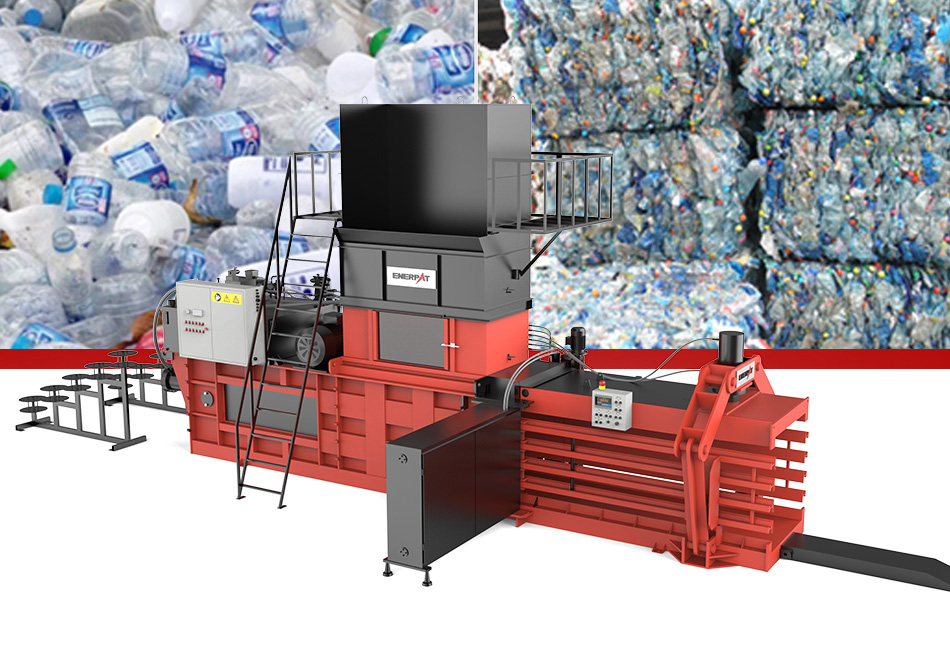
Closed-door models represent the entry point into horizontal compaction. The mechanics are straightforward. The main ram compacts material against a heavy-duty steel door at the end of the chamber. The operator continues feeding material until the chamber reaches full pressure. The machine signals that the bale is complete. The operator then manually threads wires through slots in the door and the ram face to tie off the bale. Finally, they open the door hydraulically and eject the finished bale.
These machines fit specific operational profiles. They serve facilities generating moderate-to-high volumes between 50 and 150 tons per month. They produce extremely high bale density because the material compresses against a solid wall. They offer a lower initial capital expenditure because they lack automated tying mechanisms. However, they still require dedicated labor for the tying process, making them less ideal for continuous 24/7 operations.
Open-end models utilize continuous extrusion. They do not have a closed door at the end of the chamber. Instead, the friction of the previously formed bale sitting in the extrusion channel provides the resistance for the next bale. Hydraulic tension cylinders squeeze the top and sides of the extrusion channel. This regulates the friction, creates back-pressure, and maintains consistent bale density regardless of the material type.
These machines excel in high-demand environments. They serve facilities exceeding 150 tons per month. They provide non-stop, automated processing. The wire tying mechanism ensures the machine never stops cycling as long as material enters the hopper. This is the standard choice for large distribution centers and high-volume manufacturing plants that cannot afford downtime.
Two-ram balers offer maximum versatility. The mechanics involve two separate hydraulic cylinders operating at right angles. The primary gathering ram compacts the material forward against a solid wall. Once fully compacted, a secondary ram pushes the bale out through a side chamber and ties it off. This design features a separation door that isolates different materials in the hopper from the bale chamber.
These machines serve multi-material recovery facilities (MRFs) and complex industrial sites. They function as a versatile waste paper baling machine that also handles rigid plastics, non-ferrous metals, and municipal solid waste. The two-ram design prevents cross-contamination between different material runs. You can bale cardboard in the morning and switch to PET bottles in the afternoon without manually cleaning out the chamber.
| Baler Type | Tying Mechanism | Best Volume Range | Primary Advantage |
|---|---|---|---|
| Closed-Door | Manual | 50 - 150 Tons/Month | Maximum density at a lower capital cost. |
| Open-End Auto-Tie | Automated | 150+ Tons/Month | Continuous, non-stop processing with minimal labor. |
| Two-Ram | Automated | High Volume / Multi-Material | Handles diverse materials without cross-contamination. |
You must match the feed opening to your specific waste stream. Measure the largest unbroken box size generated by your facility. Appliance boxes, gaylords, and large furniture packaging require massive feed openings, often exceeding 60 by 46 inches. If the opening is too small, large boxes will bridge across the hopper. Bridging stops material flow. It causes jams. It forces operators to intervene manually with long poles to break the bridge, defeating the purpose of an automated system.
Hopper capacity dictates how much surge volume the machine can handle. A larger hopper allows forklift operators to dump entire carts of waste at once and drive away. The machine works through the pile steadily. Proper sizing ensures the baler keeps pace with your facility's peak generation rates during shift changes or heavy receiving days.
Paper mills dictate the standard dimensions for acceptable bales. Standard mill-ready bales typically measure 60 inches long, 30 inches wide, and 45 inches high. Bales must meet these dimensions to fit efficiently into standard shipping containers and 102-inch wide dry van trailers. You can load these bales two across, maximizing the floor space of the trailer.
Density matters just as much as size. Achieving maximum bale weight is critical for optimizing freight payloads. You want to hit the legal weight limit of a trailer before you run out of physical space. High-density bales weighing 1,000 to 1,500 pounds achieve this goal. Loading 40 of these bales puts you right at the 40,000-pound payload target. Dense, uniform bales also secure premium recycling rebates. Mills prefer tight bales because they stack safely in their yards and process efficiently in their pulpers. Loose, sloppy bales risk rejection at the mill.
Installing heavy machinery requires realistic spatial planning. You must account for the entire system footprint. The baler itself takes up significant space, often exceeding 25 feet in length. The feed conveyor requires even more floor space, depending on the incline angle. You also need dedicated staging areas for large-coil wire stems. These 1,000-pound coils sit on custom stands and are essential for continuous auto-tie operation. Finally, you need a clear staging area for finished bales waiting for truck loading.
Workflow integration dictates where you place the machine. Position the commercial cardboard baler to minimize forklift travel time from your primary waste generation zones. Centralized placement reduces internal traffic. It keeps aisles clear. It ensures waste moves from generation to compaction as quickly as possible without disrupting outbound freight loading.
Unbaled cardboard is a liability. Mill-ready bales are a commodity. Producing high-density, uncontaminated cardboard bales shifts your material from a disposal cost to a sellable asset. Paper mills and recycling brokers pay premium rates for Grade 11 Old Corrugated Containers (OCC) that meet their strict density and quality standards. By utilizing high-pressure compaction, you maximize the weight of each bale. This ensures you capture the highest possible rebate value per truckload. The revenue generated from these bales directly offsets the operational costs of the facility and accelerates the payback period of the equipment.
Loose cardboard consists mostly of air. Throwing unflattened boxes into open-top dumpsters means you pay to haul air to the landfill or recycling center. Compacting cardboard reduces its volume by up to 90%. This massive volume reduction slashes the frequency of waste collections. If you currently pull a compactor or dumpster five times a week, a baler might reduce that outbound freight to once a week. You eliminate excessive hauling fees. You reduce dumpster rental costs. You decrease the carbon footprint associated with constant heavy truck traffic at your loading docks.
Your baler serves as critical facility infrastructure. If it goes down, waste backs up immediately, threatening to halt warehouse operations. Vet your cardboard baler manufacturer rigorously. Look for manufacturers that use standard, off-the-shelf hydraulic and electrical components rather than proprietary parts. This ensures you can source replacement relays, limit switches, or hydraulic hoses locally in an emergency.
Evaluate their warranty terms carefully. Understand what is covered under parts and labor. Most importantly, verify their local service technician network. You need access to rapid troubleshooting and preventative maintenance. A reliable manufacturer provides comprehensive support, including operator training and maintenance documentation, long after the initial installation.
Industrial balers require heavy-duty infrastructure. You must provide 3-phase power, typically 480V. Check the specific amperage requirements for the main motor, the conveyor drive, and the oil cooling system. Undersized electrical panels will trip breakers and halt production. You will need a licensed electrician to run dedicated conduit to the machine's disconnect panel.
Evaluate your concrete foundation. These machines weigh tens of thousands of pounds. They generate significant operational vibration during the compaction and shearing cycles. Ensure your floor's load-bearing capacity and concrete thickness meet the manufacturer's specifications. You may need to pour an 8-inch reinforced concrete pad specifically for the machine and use heavy-duty wedge anchors to secure the frame to the floor.
Industrial compaction equipment presents serious safety hazards if operated incorrectly. Ensure your machine includes comprehensive safety features. Emergency stop buttons must be accessible from multiple locations around the baler, the conveyor feed zone, and the wire tie area. Safety interlocks on all access doors must shut down the machine immediately if opened during operation.
Conveyor guarding prevents accidental entanglement. Implement strict lock-out/tag-out (LOTO) procedures for all maintenance, blade rotations, and wire-tying interventions. Train your operators thoroughly on these protocols. Protecting your team ensures compliance with OSHA regulations and prevents catastrophic workplace injuries.
A: A well-maintained horizontal baler typically lasts 15 to 20 years in heavy industrial environments. Achieving this lifespan requires strict adherence to preventative maintenance schedules. You must perform routine hydraulic fluid changes, replace worn shear blades, and swap out internal wear liners before they damage the main chamber structure.
A: The final cost depends heavily on the level of automation and the machine's configuration. Single-ram closed-door models cost less, while fully automated two-ram systems require a higher investment. Additional variables include the size of the hydraulic power unit, the type of feed conveyor required, and custom hopper modifications.
A: An auto tie baler uses mechanical inserters and twisters to secure the bale with wire automatically, allowing for continuous, non-stop operation. A manual tie baler requires an operator to stop the machine, manually thread wires through slots in the door, and tie them off by hand, which halts production for several minutes per bale.
A: Yes, many horizontal balers can process PET bottles, HDPE jugs, and shrink wrap. However, if you plan to switch frequently between cardboard and plastics, a two-ram baler is the best option. Its design prevents material cross-contamination and eliminates the need to manually clean out the chamber between different material runs.
A: Space requirements vary heavily based on the configuration. While the baler itself may be 20 to 25 feet long, you must also account for the feed conveyor, which can add another 15 to 20 feet. Additionally, you need dedicated staging space for 1,000-pound wire coils and a clear area for forklift operators to move finished bales.
A: For Old Corrugated Containers (OCC), a standard horizontal baler produces mill-ready bales weighing between 1,000 and 1,500 pounds. The exact weight depends on the machine's hydraulic cylinder size, system operating pressure, and the specific density settings configured by the operator.


 English

