

Views: 160 Author: Site Editor Publish Time: 2026-08-24 Origin: Site


Uncompacted heavy metal waste creates severe logistical bottlenecks and facility hazards. It drives up transportation overhead, consumes valuable floor space, and complicates environmental compliance. In industrial scrap management, profitability hinges on material density and facility organization. Loose scrap yields lower market rates, requires inefficient handling processes, and increases the risk of workplace accidents.
Deploying a properly specified hydraulic scrap baler resolves these inefficiencies. By applying immense mechanical force, these machines standardize waste into high-density, transport-ready blocks. Understanding the mechanics behind this equipment dictates how well procurement teams optimize yard operations. Evaluating hydraulic force, chamber dimensions, and automated controls ensures you select machinery capable of handling your specific material volume.
Hydraulic scrap balers utilize multi-directional ram systems to apply hundreds of tons of pressure, permanently deforming heavy metals into uniform, rectangular bales.
Selecting the correct ejection method (e.g., turn-out vs. forward-out) is dictated by bale size, weight, and the specific metal recycling equipment workflow.
Evaluating a heavy duty metal baler requires balancing cycle times with hydraulic force and automated control systems to ensure throughput aligns with facility generation rates.
The core of any compaction machine lies in its hydraulic power unit. Pumps and valves work in tandem to convert electrical energy into massive mechanical force. Electric motors drive hydraulic pumps, typically axial piston pumps, which push specialized fluid through a network of reinforced hoses and steel manifolds. This pressurized fluid enters large-bore hydraulic cylinders. As the fluid fills the cylinder chamber, it extends a solid steel rod connected to a heavy compaction ram.
Most industrial units utilize a sequence of primary and secondary rams. The primary ram gathers loose material and pushes it deep into the compaction chamber. The secondary ram then descends or moves laterally to apply directional pressure. This multi-axis compression crushes irregular, high-tensile scrap into a solid block. The total force exerted often exceeds several hundred tons. Engineers calculate this force by multiplying the hydraulic fluid pressure, often running between 3,000 and 4,500 PSI, by the surface area of the cylinder piston. High-pressure systems ensure even the most stubborn metal shapes collapse under the load.
Metals possess distinct yield strengths. Yield strength defines the point at which a material permanently deforms rather than springing back to its original shape. Heavy steel plate, aluminum extrusions, and copper wire all require different levels of force to surpass this threshold. A robust baling machine overcomes these limits through sustained, concentrated pressure. The ram face pushes against the scrap, forcing the metal to fold, bend, and interlock with surrounding pieces until all void space is eliminated.
Oversized scrap often extends beyond the dimensions of the press box. To handle this, many machines feature integrated shear blades. These hardened steel blades mount to the edge of the compaction chamber and the leading edge of the compression lid or ram. As the ram advances, the blades slice through any protruding metal. This trimming action prevents jams and ensures the final bale maintains a perfect rectangular shape. Operators rely on these shear capabilities when processing long pipes, structural I-beams, or bulky automotive skeletons that refuse to lay flat in the hopper.
Once the metal reaches maximum compaction, internal expansion pressure threatens to break the block apart. Automated hydraulic tying systems maintain bale integrity. These mechanisms feed heavy-gauge steel wire around the compressed metal. Hydraulic knotters twist the wire securely, locking the material in its dense state. The tying cycle happens rapidly, minimizing delays between compaction rounds. Some facilities processing highly interlocking materials like thin sheet aluminum may bypass tying entirely, relying on the material's own deformation to hold the bale together.
The final phase involves ejecting the finished block. The machine opens a discharge door, and a hydraulic cylinder pushes the bale out of the chamber. Producing blocks of consistent size and weight optimizes downstream handling. Forklifts and grapples can easily grip uniform bales. Safe stacking becomes possible, maximizing vertical storage space in the yard. Consistent bale dimensions also streamline loading into shipping containers or flatbed trailers, ensuring you hit maximum payload weights without exceeding dimensional limits.
Selecting the right configuration depends entirely on your material mix and density requirements. Two-ram systems are ideal for standard industrial scrap recycling. They utilize a gathering ram and a compaction ram. This setup works exceptionally well for softer metals, sheet iron, and mixed non-ferrous materials. Two-ram machines offer a balanced combination of speed and compaction force, making them highly versatile for mid-volume facilities processing a predictable waste stream.
Three-ram systems deliver maximum density in highly resistant metals. These machines add a third axis of compression. A lid or vertical ram crushes the material downward before the horizontal rams take over. This triple-action process eliminates air pockets and forces heavy steel into incredibly dense blocks. While three-ram systems require a larger machine footprint and sometimes feature slightly slower cycle speeds, the resulting bale density is unmatched, making them the standard for heavy industrial yards.
Feature | Two-Ram Configuration | Three-Ram Configuration |
|---|---|---|
Primary Application | Standard industrial scrap, non-ferrous metals, sheet iron. | Heavy steel, structural scrap, highly resistant alloys. |
Compaction Axes | Two (Gathering and Compacting). | Three (Vertical crushing, Gathering, Compacting). |
Cycle Speed | Generally faster, optimized for high throughput. | Slightly slower due to the additional compression stage. |
Machine Footprint | Moderate footprint, easier to integrate into existing layouts. | Large footprint, requires substantial floor space. |
Final Bale Density | High density, suitable for standard freight. | Maximum density, ideal for foundry direct shipping. |
The method used to remove the finished bale impacts overall machine durability. The turn-out ejection method utilizes a hydraulic flipper to roll the bale out of the side of the chamber. While effective for smaller machines, this method has limitations. Exceptionally large or heavy bales place immense mechanical stress on the hinge mechanisms of the turn-out door. Over time, this stress leads to metal fatigue, hinge failure, and increased maintenance requirements.
Forward-out, or push-out, designs serve as the industry standard for a heavy duty metal baler. In this configuration, the main compaction ram simply continues its stroke, pushing the bale straight out through a reinforced discharge door. This linear motion eliminates lateral stress on the machine frame. Forward-out ejection easily handles high-volume, high-weight blocks without compromising structural integrity. It also allows for continuous extrusion baling, where each new bale pushes the previous one down an exit chute.
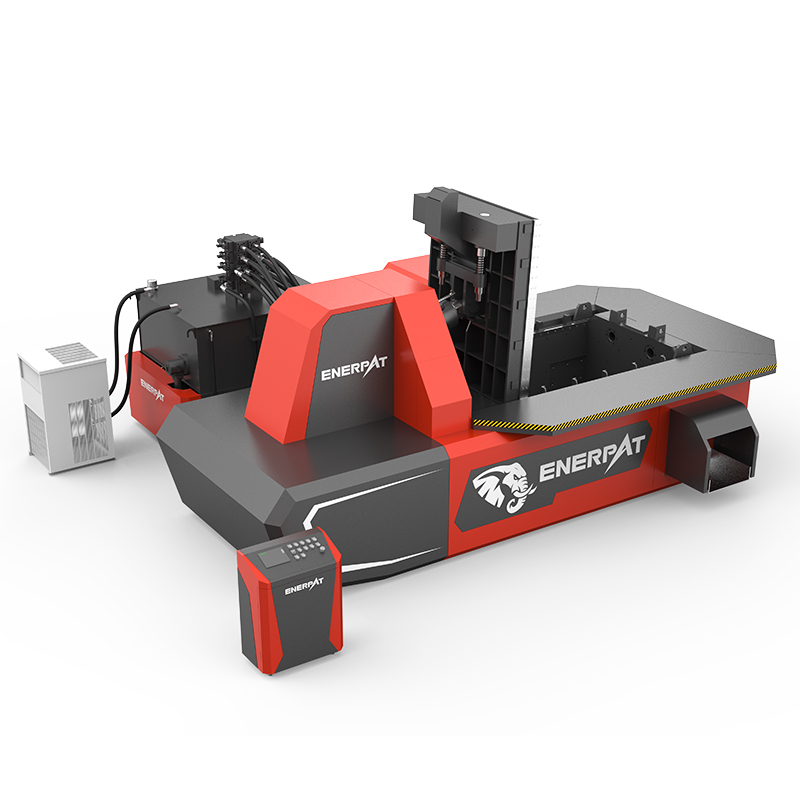
The loading chamber size must directly align with the physical dimensions of your raw scrap. If the press box is too small, operators waste time manually cutting material to fit. A spacious hopper accommodates bulky items like car doors, large appliances, or long extrusions without pre-processing. You map the volumetric capacity of the chamber against your required hourly throughput. Volumetric capacity determines how much loose material the machine can ingest per cycle, directly dictating your daily tonnage limits.
Establishing success criteria for cycle times prevents bottlenecks during peak production hours. Cycle time refers to the duration it takes for the rams to extend, compress the metal, and retract to the starting position. Faster cycle times increase overall tonnage processed per shift. High-speed pumps combined with regenerative hydraulic circuits allow the rams to move quickly during the low-pressure gathering phase, then automatically slow down to apply maximum force during final compaction.
Modern metal recycling equipment utilizes Programmable Logic Controllers (PLCs) to manage complex hydraulic sequences. PLCs act as the brain of the machine, continuously monitoring pressure sensors, limit switches, and fluid temperatures. This automation allows operators to adjust hydraulic pressure profiles for various types of metal waste. Different materials require different handling strategies to achieve optimal density without damaging the equipment.
Automated cycle presets prevent machine overstrain. When switching between rigid steel and softer aluminum scrap, the operator simply selects the corresponding program on the touchscreen interface. The PLC automatically adjusts the maximum hydraulic pressure and ram stroke limits. This versatility ensures the machine applies just enough force to compact aluminum without wasting energy, while reserving its maximum power for unyielding steel components. Smart diagnostics also alert operators to potential faults before they cause system failures.
The inside of a compaction chamber endures extreme friction and abrasion. Replaceable, high-abrasion-resistant steel liners are an absolute necessity. Materials like Hardox 450 or 500 steel provide exceptional hardness and toughness. These liners bolt or weld into the press box, taking the brunt of the wear as jagged metal scrapes against the walls under high pressure. Replacing worn liners is a standard maintenance procedure that protects the underlying machine frame from permanent damage.
Structural frame welding and stress-relieving processes prevent machine fatigue under continuous heavy loads. Manufacturers build these frames from thick steel plates, utilizing deep penetration welding techniques. After welding, the entire frame undergoes thermal stress relief. This process heats the steel to a specific temperature, relaxing internal stresses created during manufacturing. A stress-relieved frame resists cracking and warping, ensuring decades of reliable service in harsh industrial environments.
Continuous operation generates significant heat within the hydraulic fluid. Premium hydraulic components, including variable displacement pumps and custom-machined manifolds, minimize internal friction and pressure drops. High-quality directional valves ensure smooth fluid flow, reducing hydraulic shock during rapid ram directional changes. Reliable components keep the system operating at peak efficiency, translating directly to consistent compaction force.
Integrated cooling systems prevent fluid degradation during continuous shifts. When hydraulic oil overheats, its viscosity drops, leading to sluggish performance and increased wear on pump internals. Heat also accelerates the breakdown of hydraulic seals. Air-to-oil or water-to-oil heat exchangers continuously circulate the fluid, maintaining optimal operating temperatures. Kidney loop filtration systems run parallel to the coolers, constantly removing microscopic contaminants that cause premature component failure.
Maximizing bale density directly reduces freight costs. Transportation logistics represent a massive expense in scrap management. Shipping loose, low-density material means you pay to transport empty air. High-density bales allow you to maximize the legal weight limits per trailer or shipping container. Fewer trips are required to move the same tonnage of material. This logistical efficiency significantly lowers fuel consumption, driver hours, and fleet maintenance overhead.
Uniform, high-density rectangular bales command better acceptance from foundries and smelters. Loose scrap creates unpredictable melting conditions and increases slag production. Dense bales sink quickly into the molten bath, reducing oxidation and improving overall yield. Because these bales offer predictable melt rates and easier handling, end-users prefer them over loose material. Supplying a superior, standardized product strengthens vendor relationships and secures consistent off-take agreements.
Industrial balers require substantial electrical power to drive high-horsepower hydraulic units. Analyzing the electrical draw helps facilities manage peak load demands. Traditional systems run electric motors at full speed continuously, even when the machine is idling between cycles. This constant operation wastes significant energy and generates unnecessary heat. Modern engineering focuses on delivering maximum compaction power while minimizing wasted electrical draw.
Variable frequency drives (VFDs) and smart hydraulic systems reduce power consumption during idle or low-resistance cycle phases. A VFD adjusts the motor speed based on the immediate hydraulic demand. When the operator is loading the chamber, the motor slows down, drastically cutting energy use. As the compaction cycle begins and pressure requirements spike, the VFD instantly ramps up motor speed. This on-demand power delivery optimizes energy efficiency without sacrificing cycle speed or crushing force.
Routine maintenance keeps a scrap metal baler running smoothly. Hydraulic fluids require regular sampling and scheduled changes to maintain proper viscosity and cleanliness. Technicians must replace return-line and pressure filters to trap metal shavings and dirt. Cylinder seals eventually wear out and need repacking to prevent fluid leaks and pressure loss.
You frame the cost of preventative maintenance against the catastrophic cost of unplanned downtime. In a continuous recycling operation, a broken baler halts the entire production line. Scrap piles up, trucks wait to be loaded, and operational flow ceases. Establishing a strict maintenance schedule mitigates these risks. Yard managers implement the following baseline checks:
Inspect hydraulic fluid levels and operating temperatures at the start of every shift.
Check shear blades for chipping or dulling, adjusting gap tolerances as needed.
Grease all pivot points, hinges, and ram guides to prevent metal-on-metal wear.
Monitor heat exchanger fins for dust buildup and clean them with compressed air.
Verify the operation of all safety interlocks and emergency stop buttons weekly.
Installing heavy machinery requires careful physical planning. These machines generate massive kinetic energy and static weight. A standard factory floor cannot support the load. You address the physical realities of installation by pouring reinforced concrete foundations. Engineers design concrete pads thick enough to absorb operational vibration and support the machine's weight without cracking. Anchor bolts secure the frame to the foundation, preventing creeping during operation.
Spatial planning dictates safe loading and bale offloading. The machine footprint is only one part of the equation. You allocate sufficient space for material handling equipment. Cranes, excavators with grapples, or heavy-duty infeed conveyors need clear access to the loading hopper. Similarly, the discharge area must accommodate forklifts retrieving finished bales. Poor spatial planning leads to congested workflows, increasing the risk of collisions and slowing down overall throughput.
Industrial environments demand rigorous safety protocols. Essential safety features on modern balers include emergency stop buttons strategically placed around the machine perimeter. Safety interlocks on access doors immediately shut down hydraulic power if opened during operation. Enclosed operator cabins protect workers from flying debris, excessive noise, and harsh weather conditions. Light curtains detect unauthorized entry into the loading zone, instantly halting the ram.
Baling machines encourage superior scrap management by containing sharp debris and residual cutting fluids. Loose metal shavings and jagged edges pose severe laceration hazards. Compacting this material neutralizes the physical danger. Many balers feature drip trays and fluid collection sumps. When compacting automotive scrap or machined parts, residual oils and coolants are squeezed out. Collecting these fluids prevents soil contamination and improves environmental compliance.
Strict compliance with OSHA standards for heavy machinery operation is non-negotiable. Facilities implement comprehensive lockout/tagout (LOTO) procedures. Before any maintenance occurs, all electrical and hydraulic power sources must be isolated and locked. Comprehensive operator training ensures staff understand the machine's capabilities, limitations, and emergency procedures. A culture of safety protects personnel and prevents costly liability issues.
Conduct a facility scrap audit to determine exact volume and primary material types before contacting a scrap metal baler manufacturer.
Measure available floor space and consult structural engineers regarding reinforced concrete foundation requirements.
Request detailed technical specification sheets from shortlisted vendors, focusing on cycle times and hydraulic pressure ratings.
Evaluate current logistical setups to ensure forklifts and trailers can safely handle high-density bales.
A: With proper maintenance, a high-quality baler lasts 15 to 20 years. Structural longevity depends on a stress-relieved frame and the consistent replacement of internal wear liners. Routine maintenance, such as hydraulic fluid filtration and cylinder seal replacement, prevents catastrophic failures and extends the machine's operational life.
A: Baling standard steel scrap typically requires hydraulic systems capable of generating between 3,000 and 4,500 PSI, translating to 150 to over 400 tons of ram force. The exact tonnage requirement depends on the steel's thickness, yield strength, and the desired density of the final bale.
A: Yes, versatile machines handle both materials using Programmable Logic Controllers (PLCs). The PLC allows operators to adjust hydraulic pressure profiles. Lower pressure is used for aluminum to prevent over-compaction, while maximum force is deployed for heavy steel. Operators clean the chamber between runs to avoid material cross-contamination.
A: A standard baler focuses purely on compacting material into a dense block. A shear baler features a heavy-duty guillotine blade that cuts long, oversized scrap, like structural beams or pipes, into smaller pieces before or during the compaction process, making it ideal for demolition yards.
A: Evaluate manufacturers based on parts availability, service level agreements, and engineering transparency. Look for verifiable industrial case studies demonstrating their equipment's performance in environments similar to yours. A reliable manufacturer offers robust post-installation support and operator training programs.
A: Industrial balers require engineered, reinforced concrete pads. These foundations must be thick enough to handle the machine's immense static weight and absorb the dynamic kinetic forces generated during the compaction cycle. Anchor bolts and vibration isolation pads secure the equipment safely.


 English


