

Views: 0 Author: Site Editor Publish Time: 2026-08-30 Origin: Site


A metal baler is core equipment for the scrap metal recycling industry. But when it comes to choosing between a ferrous baler and a non-ferrous baler, do you know which option to select? Choosing the wrong one will increase your energy costs and may even damage the value of your materials.
This guide breaks down the differences between these two types of balers in terms of material characteristics, applications and machine selection to help you get the right equipment.
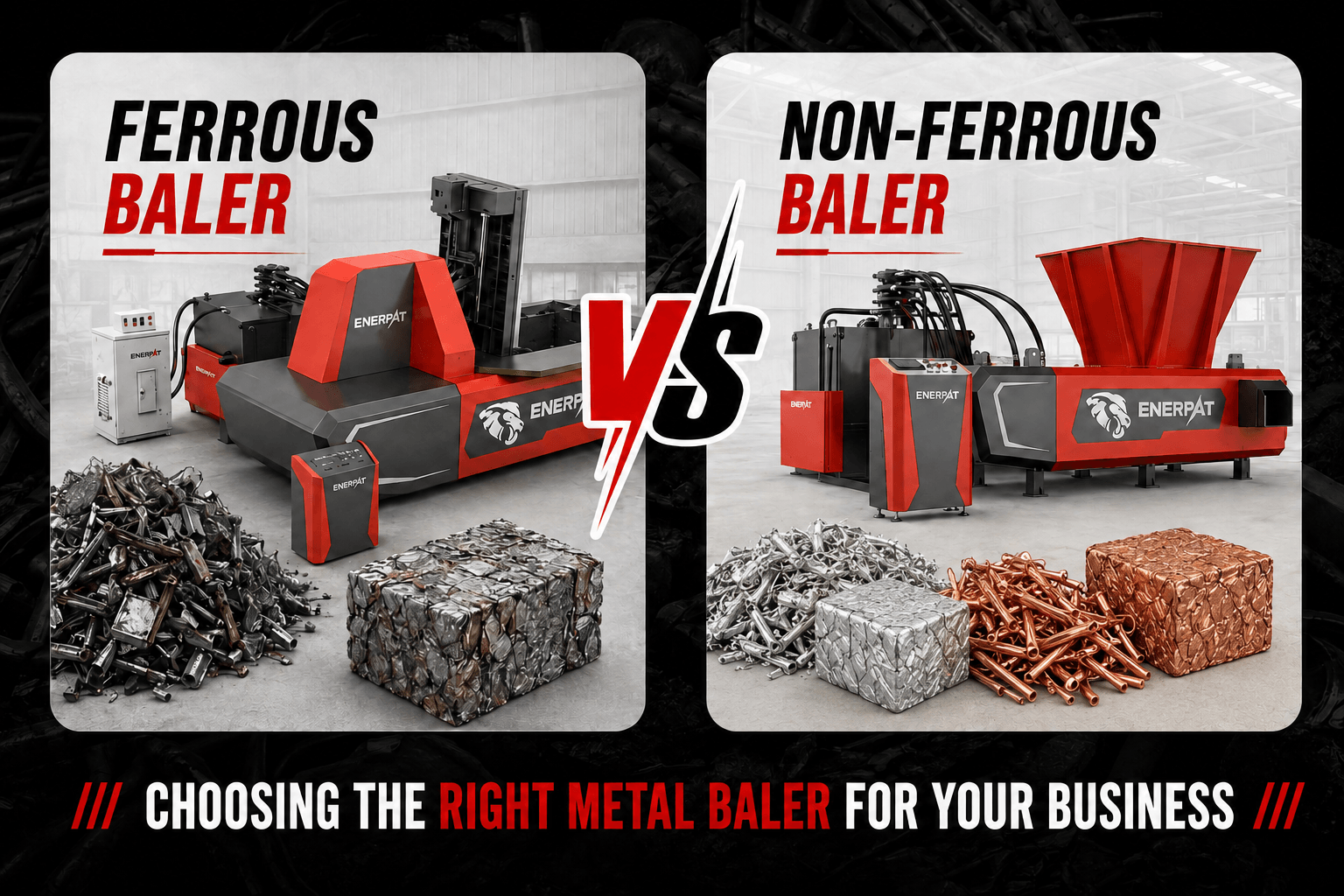
A ferrous baler is a heavy-duty hydraulic machine primarily designed for processing waste metals containing iron and magnetic properties. It features a high-strength steel frame and larger hydraulic cylinders to deliver massive pressing force.
To understand why a ferrous baler requires such immense power, we need to know the unique properties of ferrous metals themselves:
High hardness: Whether it is structural steel or car bodies, ferrous metals are extremely tough. The baler must not only press them but also overcome their strong springback.
Relatively lower value density: Compared to other metals, scrap steel and iron sell at lower prices per ton. This means your business must rely on high throughput and low logistics costs to make a profit.
Prone to rust and oxidation: The surfaces of iron scrap are highly susceptible to oxidation and rusting, which can lead to burning loss and oxidation. So, ferrous balers need to generate enough pressure to reduce the exposed surface of the scrap.
These ferrous balers are essential equipment for the following scrap processing scenarios:
Scrap Steel Yards: Centrally collect, sort, and process large volumes of industrial and municipal steel scrap for efficient storage and transport.
Auto Dismantling Facilities: After removing engines and valuable parts, compress entire car shells into dense bales.
Steel Mill Feedstock Preparation: Pre-compress scrap before furnace charging to shorten melting cycles and boost melt efficiency.
Scrap Metal Processing Centers: Process mixed ferrous scrap from demolition sites, construction waste, and manufacturing offcuts.
Given the wide variety and applications for ferrous metal scrap, manufacturers have designed a range of machines:
Large Horizontal Balers: Using a horizontal pushing ram, they are built for continuous and high-volume scrap steel processing.
Car Balers: Specially designed for pressing scrap shells, these machines can quickly compress bulky scrap bodies into dense blocks.
Shear-Baler Combinations: This dual-system machine integrates cutting and baling into a single process. It is ideal for processing oversized and irregular scrap
Dual-Cylinder Horizontal Balers: It is equipped with two heavy hydraulic rams that deliver twice the force and longer strokes. This heavy-duty equipment is designed to process high-springback plates and heavy structural steel.

A non-ferrous baler is a metal baling machine optimized for non-magnetic, iron-free metals like aluminum and copper. These machines focus more on delivering fast compression speeds, controlling material contamination, and supporting highly automated operation.
Unlike steel scrap, the non-ferrous metal waste in your workshop has several traits that require a specialized baling solution:
Softer and More Ductile: Materials like aluminum foil and copper wire deform easily but have high springback. Your non-ferrous baler must have a pressure-holding system to keep bales tight after ejection.
Higher Recycling Value: non-ferrous metals such as copper and aluminum are worth much more than scrap steel. To get top prices from mills, you need machines that produce clean and high-quality metal bales.
Fine and Contaminated Form: Aluminum turnings and copper chips are often coated with cutting fluid. So, you need a non-ferrous baler equipped with a fluid collection system.
A non-ferrous metal baler offers many advantages in the following high-profit scrap processing areas:
UBC Recycling Centers: Specially designed for large-scale processing of used beverage cans, they convert loose aluminum cans into standard high-density bales.
Copper Wire Recovery Plants: These facilities process scrap copper wires, cables, and copper granules to ensure fast and efficient melting inside the furnace.
Aluminum Scrap and Extrusion Processing: These machines are used by auto parts factories and window manufacturers to process aluminum stamping off-cuts and chips directly on-site.
To perfectly match the processing needs , there are many types of non-ferrous baler for sale:
Can Balers: Usually paired with large-capacity hoppers and high-speed hydraulics, these machines automatically feed, press and strap aluminum cans.
Aluminum/Copper Chip Balers: Specially designed for high-value metal scraps, this model uses a sealed chamber to squeeze out and recycle over 95% of cutting fluids while compacting the chips.
Single-Ram or Double-Ram Balers: Equipped with side-pushing and main-pushing hydraulic rams, these types easily handle elastic and tough non-ferrous metals, ensuring uniform bale sizes.

Although ferrous and non-ferrous metal balers share the same primary goal of compressing scrap into dense, manageable bales, the distinction is not always absolute. Many balers can handle both types of metal, but their design priorities may vary according to material properties, size, density, and processing requirements. The table below highlights the typical differences to help you identify the most suitable baling solution for your application.
Comparison Dimension | Ferrous Balers | Non-Ferrous Balers |
Material Types | Scrap steel, scrap iron, car bodies, rebar, heavy structural steel | Aluminum off-cuts, scrap copper wire, used beverage cans (UBC) |
Material Properties | High hardness, strong resistance, high rebound | Soft, ductile, easily deformed |
Pressing Force | Extremely high | Moderate |
Baling and Ejection | Bales are often self-locking and can be ejected mechanically without additional tying. | Some applications may require wire or strap tying for additional bale stability. |
Scrap Value | Lower per-ton value, profit from high volume | High premium value, profit from quality premium |
Choosing the right metal baler directly affects your production efficiency, operating costs, and final profits. Follow these four key steps to make a smart decision:
First, confirm whether your material is ferrous or non-ferrous. Ferrous metals are mainly steel and iron.They are hard,and require high-tonnage equipment. non-ferrous metals are mainly aluminum and copper, which are softer, higher in value, and demand better bale quality.
The physical form of your scrap directly affects how it is fed and compressed. Common forms include:
Bulky scrap: such as car bodies, I-beams, and heavy structural parts. These require large balers with wide feed openings.
Fine scrap: such as aluminum chips and copper shavings. These need dedicated chip balers with hoppers and feeding systems.
Long or irregular scrap: such as steel pipes and cables. Consider shear-baler combinations to avoid jamming.
Scrap density directly affects the pressure and cycle time required. Light, loose materials need multiple compressions to reach target density. Heavy, dense materials require enough force for direct forming.
The density and size of finished bales are determined by the receiving standards of downstream smelters or buyers:
High-density bales: ideal for long-distance transport and feeding into large furnaces.
Standard-size bales: easier for stacking, loading, and storage.
Based on the material characteristics and selection criteria above, ENERPAT offers several metal baler configurations to match different scrap types, material sizes, and production requirements, covering everything from non-ferrous metals to heavy ferrous scrap compression:

The AMB-L series features a lid-style compression structure, designed specifically for heavier and bulkier metal materials. The main cylinder pressing force ranges from 125 to 315 tons, making it ideal for heavy ferrous and non-ferrous metals such as scrap steel, scrap iron, aluminum extrusions, stainless steel, and mattress springs.
Combined with cutting blades at the chamber entrance, this equipment ensures reliable performance under long-term operations. It is well-suited for high-volume scrap steel yards and steel mill processing lines.
The AMB-H series features a hopper-type feeding design, developed specifically for light to medium-density non-ferrous metal scrap. The main cylinder pressing force ranges from 100 to 250 tons. It is mainly used for processing scrap copper, aluminum cans, and aluminum chips and can also handle light ferrous materials like steel wire.
Its patented hopper design supports 24/7 continuous feeding, making it ideal for customers with moderate scrap volumes and steady feed requirements. The pressing process requires no adhesives, helping form compact and stable bales while preserving the recyclable value of non-ferrous metals.
Employing triple compression technology, this machine is designed for high-volume, heavy scrap processing. It can handle both ferrous and non-ferrous metals, including aluminium, copper, iron and stainless steel, and is ideal for customers with strict requirements on bale density and dimensions. It is particularly suitable for steel mills, foundries, and large metal recycling centers.
This series is a heavy-duty solution specifically designed for compressing large ferrous scrap such as vehicle bodies and mixed-metal components. It features an extra-large feed box that can accept waste without requiring pre-shredding. The key highlight is the availability of both fixed and mobile configurations, enabling flexible operation in various environments.
Q: Can one metal baler handle both ferrous and non-ferrous metals?
A: Yes. Our ENERPAT machines offer excellent multi-material flexibility. For example, the AMB-L series can strongly compress structural scrap steel as well as large aluminum profiles.
Q: How does the machine handle liquids when baling oily metal chips?
A: Non-ferrous metal balers can be equipped with a fluid recovery system. During the high-pressure pressing process, over 95% of cutting fluids are squeezed out and routed directly into a collection tank.
Q: Does an industrial metal baler consume a lot of energy?
A: Energy consumption depends on material hardness and machine tonnage. Generally, ferrous balers consume more energy due to higher pressing force and motor power, while non-ferrous metal balers are relatively more energy-efficient.
Q: Can the finished bale dimensions be customized based on our needs?
A: Yes. Many baler series support fully customized bale sizes. ENERPAT engineering team will design the perfect bale size to match your needs.
Q: Which one is more expensive: a ferrous baler or a non-ferrous baler?
A: Generally, a ferrous baler is more expensive for the same production capacity, because it requires a much thicker steel frame, larger hydraulic cylinders, and higher motor power, driving up hardware costs.
Choosing a metal baler is not just about whether your scrap is ferrous or non-ferrous. Material type, size, density, bale requirements, and processing volume all matter. The right baler can help you process scrap faster, reduce storage and transportation costs, and produce consistent bales.
With decades of experience in recycling equipment, ENERPAT provides reliable baling solutions for steel, iron, aluminum, copper, and more. We also offer customized machine configurations and bale sizes to meet your needs.
Not sure which metal baler is right for you? Contact ENERPAT today for a free consultation!


 English


