

Views: 0 Author: Site Editor Publish Time: 2026-09-15 Origin: Site


Procuring heavy waste management equipment is a high-stakes capital investment. Selecting an under-powered or incompatible machine leads to operational bottlenecks, excessive labor costs, and delayed returns on investment. Facilities generating high volumes of recyclable waste must transition from inefficient waste handling to streamlined, high-density baling. However, navigating the market requires matching specific facility throughput, material types, and labor constraints with exact machine specifications.
Before signing a purchase order, operations and procurement teams must evaluate technical specifications, facility constraints, financial viability, and vendor reliability. This guide provides a strict evaluation framework for sourcing the right equipment and avoiding costly procurement errors. You will learn how to assess your true throughput needs, analyze machine capabilities, and structure your facility for seamless integration.
Knowing exactly when to upgrade your waste processing equipment prevents you from overspending on unnecessary capacity or underspending on a machine that chokes during peak hours. You must evaluate your current labor allocation and material flow to determine the exact moment an upgrade becomes necessary.
Vertical baling machines serve a distinct purpose for retail backrooms and low-volume distribution centers. However, they demand constant manual loading, tying, and ejection. The tipping point for upgrading usually occurs when processing exceeds two tons per hour. When your staff spends more time breaking down boxes and feeding a vertical chamber than performing their primary duties, labor costs become prohibitive. Transitioning to a horizontal baler automates the feed process. This shift allows facilities to handle massive volumes continuously without tying up forklift operators and warehouse staff.
Consider the daily workflow of a busy distribution center. If a forklift driver has to dismount, manually throw cardboard into a vertical baler, wait for the cycle, and repeat this process twenty times a shift, you are losing hours of productivity. A horizontal system fed by a continuous conveyor eliminates this manual handling entirely.
Not all recyclables behave the same way under pressure. Cardboard (OCC) is rigid but folds predictably. Plastics, particularly PET bottles and HDPE containers, possess high material memory. They actively resist compression and attempt to expand back to their original shape. This memory dictates your machine requirements. Processing plastics demands higher cylinder pressure and aggressive shear blades to cut and hold the material effectively.
If you process high-memory materials with a machine designed strictly for paper, you will experience blown wire ties and misshapen bales. The platen must hold the material under maximum pressure while the wire ties are secured. Failing to match the machine's hydraulic capabilities to the material's memory results in constant operational failures.
Your end goal dictates your equipment strategy. Some facilities purchase equipment strictly to reduce hauling fees. By compacting loose waste, they reduce the number of dumpster pulls required each week. Other operations aim to process and sell high-grade baled commodities to mills and recyclers. If revenue generation is your goal, bale density and uniformity are paramount.
Mills pay premium rates for dense, mill-ready bales that maximize shipping container weights. A machine that produces loose, lightweight bales will directly reduce your commodity revenue. You must ensure the equipment you select can achieve the specific bale weights demanded by your downstream buyers.
Environmental compliance plays a major role in equipment procurement. Aligning your baler output with EPA recycling guidelines helps facilities meet strict sustainability targets. Many municipalities now enforce zero-waste-to-landfill mandates. Processing your own recyclables on-site ensures compliance and creates a transparent audit trail for your waste streams.
Meeting these standards often opens up new tax incentives and green business grants, accelerating your equipment payback period. Facilities that proactively manage their waste streams avoid municipal fines and position themselves favorably for corporate sustainability audits.
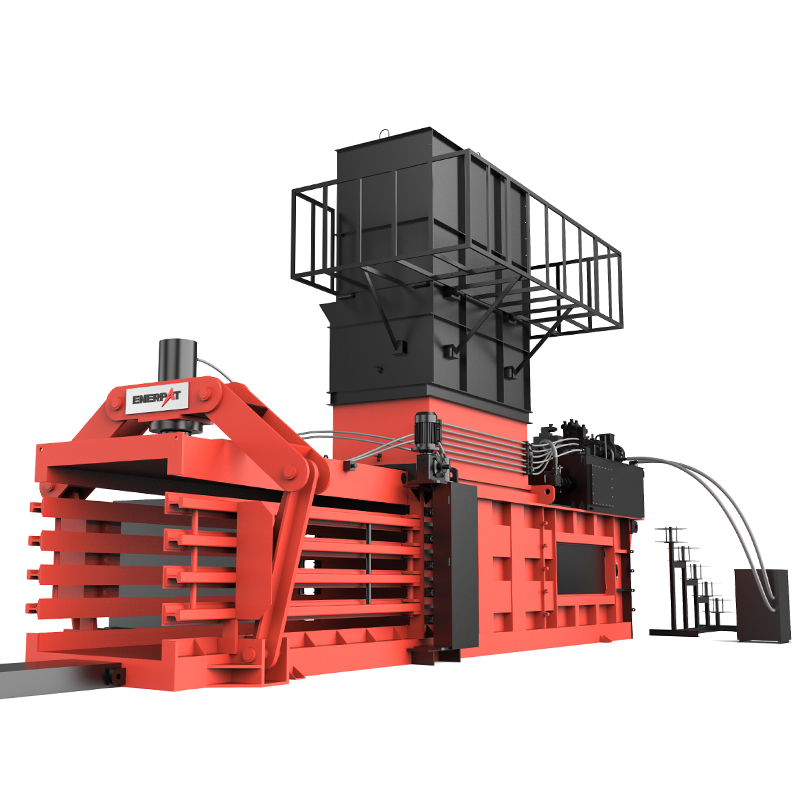
Understanding the structural differences between machine categories ensures you select the right tool for your specific material stream. The market offers three primary configurations, each engineered for distinct operational environments and throughput capacities.
Closed-end models feature a heavy steel door at the extrusion end. The ram pushes material against this closed door to achieve maximum compaction. Once the bale reaches the desired size, the operator manually ties the bale wires before opening the door to eject it. These machines are ideal for facilities processing up to three tons per hour.
They deliver exceptional bale density, making them perfect for operations that prioritize heavy bales but do not have the continuous volume to justify automated tying mechanisms. The manual tying process takes several minutes per bale, which limits the overall hourly throughput but guarantees a tightly bound final product.
For high-throughput facilities processing between three and fifteen-plus tons per hour, manual tying creates an unacceptable bottleneck. An auto tie horizontal baler utilizes a continuous extrusion process. The machine pushes new material against the previously formed bale, using the friction of the extrusion chamber to achieve density.
Automated wire tying mechanisms wrap and knot the high-tensile wire around the bale without human intervention. This eliminates the need for a dedicated operator, allowing the machine to run continuously as long as the feed conveyor supplies material. The inserter needles and twister hooks work in tandem to secure the bale in seconds, maintaining high production rates during peak shifts.
Material Recovery Facilities (MRFs) and large-scale recycling centers often process multiple commodity types in a single shift. A two-ram system features a primary gathering cylinder and a secondary compaction/ejection cylinder. This design allows operators to switch quickly between cardboard, plastics, and non-ferrous metals without material contamination.
The two-ram design excels at handling high-memory materials and produces the densest, most uniform bales available. Because the ejection ram pushes the completed bale out perpendicular to the gathering chamber, the machine can clear itself completely before switching to a new material type. It is the ultimate solution for versatile, high-volume commodity processing.
| Machine Type | Ideal Throughput | Tying Mechanism | Best Suited Materials |
|---|---|---|---|
| Closed-End | 1 to 3 Tons/Hour | Manual | Cardboard, Paper, Shrink Wrap |
| Open-End Auto Tie | 3 to 15+ Tons/Hour | Automated | Cardboard, Paper Trim, PET |
| Two-Ram | 10 to 30+ Tons/Hour | Automated (Wire or Plastic) | Multi-Material, Non-Ferrous Metals, E-Waste |
Evaluating a horizontal baler for sale requires looking past the marketing brochures and analyzing the raw engineering specifications. The physical capabilities of the machine must align perfectly with your daily operational demands.
The compaction power of any baling machine comes from its hydraulic system. You must evaluate the combination of cylinder bore size and system operating pressure. These two factors dictate the total ram force, often referred to as platen force. A larger cylinder operating at high pressure delivers massive compaction force.
This force directly correlates to bale density. Denser bales optimize payload weights for shipping, ensuring you do not ship empty space in your trailers. For example, an 8-inch cylinder operating at 3,000 PSI generates significantly more platen force than a 6-inch cylinder at the same pressure. You must calculate the exact face pressure (force divided by the surface area of the platen) to determine if the machine can handle your specific materials.
Motor size drives the hydraulic pumps. The horsepower determines how fast hydraulic fluid moves through the system, which dictates the dry cycle time. Dry cycle time is the time it takes for the ram to fully extend and retract empty. Faster cycle times are critical for maintaining throughput during peak surges.
If your conveyor feeds material faster than the ram can cycle, material backs up into the hopper, causing jams and forcing you to halt the feed line. A 50 HP motor will cycle faster than a 30 HP motor on the same size cylinder. You must balance the need for speed with your facility's electrical capacity.
Baling machines endure violent, repetitive stress. Heavy-duty steel frame construction is non-negotiable. Look for machines utilizing abrasion-resistant (AR) steel wear liners in the charge box and extrusion chamber. These liners protect the main frame from the constant friction of abrasive materials.
Robust, continuous welding prevents structural fatigue over years of high-pressure operation. Cheaper machines often use stitch welding and thinner steel, leading to catastrophic frame failure under heavy loads. Inspect the shear blade design as well; a serrated, replaceable shear blade cuts through overlapping cardboard much more efficiently than a flat, welded blade.
Your new machine must integrate seamlessly with your existing or planned feed methods. The control panel must feature programmable logic controllers (PLCs) that can communicate with external equipment. Common feed systems include:
Ensure the machine's hopper design and control panel can interface securely with your specific feed equipment to automate the start/stop cycles based on the hopper's photo-eye sensors.
The feed opening must match the largest unbroken material size your facility generates. If you process large appliance boxes, a small charge box will cause the cardboard to bridge across the opening. Bridging prevents material from falling into the chamber, requiring operators to manually clear the jam.
Sizing the charge box correctly eliminates this dangerous and time-consuming intervention. Measure your largest standard box size and ensure the clear opening of the charge box exceeds those dimensions by at least ten percent.
Always calculate your required capacity based on peak surge volumes, not just daily averages. If your facility generates ten tons of waste a day, but eight of those tons arrive during a two-hour shipping window, you need a machine capable of handling four tons per hour.
Sizing based on daily averages guarantees severe bottlenecks during your busiest shifts. You must also factor in the bulk density of the loose material. Light, fluffy materials require more cycles to achieve the same tonnage as dense, heavy materials.
Bale dimensions directly impact freight efficiency. Standard mill-sized bales typically measure 60 inches long, 30 inches wide, and 48 inches high. These dimensions allow you to stack bales efficiently in standard shipping containers or on flatbed trailers.
The goal is to hit the maximum legal payload target before you run out of cubic space. If your bales are too light, you will fill the truck before hitting the weight limit, effectively paying to ship air. Verify the machine's expected bale weights for your specific commodities before purchasing.
Even the most powerful machine will fail if it does not fit your facility's physical and electrical infrastructure. Pre-installation planning mitigates the risk of costly modifications after the equipment arrives.
Spatial planning goes far beyond the physical dimensions of the machine. You must account for the entire operational footprint. This includes the angle and length of the feed conveyor, staging areas for baling wire stems, and forklift maneuvering space for bale removal.
Most importantly, you must leave adequate clearance for maintenance access. If a hydraulic cylinder needs repacking or replacement, technicians need enough physical space behind the machine to pull the cylinder out entirely. Trapping a machine in a tight corner turns a standard maintenance task into a logistical nightmare.
Industrial baling equipment draws massive electrical currents. You must audit your facility's power capabilities before purchasing. Standard requirements usually demand 460V, 3-Phase power. If your building only has 208V or 240V service, upgrading your electrical panels and transformers requires significant capital.
Additionally, large motors create severe amperage spikes upon startup. Discuss the installation of soft-start mechanisms or variable frequency drives (VFDs) with your electrician to manage these spikes and prevent tripping facility breakers. Failing to audit your electrical supply will delay installation by weeks.
Heavy hydraulic equipment presents severe pinch points and crushing hazards. Mandatory safety features are non-negotiable. Look for comprehensive interlock switches on all access doors that immediately kill power if opened. Emergency stop buttons must be easily accessible from all operator stations and feed areas.
Proper guarding around the feed chute prevents accidental falls into the charge box. Finally, the main control panel must feature robust lock-out/tag-out (LOTO) accessibility to protect maintenance personnel during servicing. Ensure the equipment meets all current ANSI and OSHA standards for baling machinery.
Procurement teams often fall into predictable traps when evaluating heavy machinery. Avoiding these common errors ensures your investment delivers long-term value rather than daily frustration.
Purchasing a commercial waste baler with a feed opening that is too small for your standard material size is a critical error. Facility managers sometimes choose a smaller model to save on upfront costs. This leads to constant material bridging and jams.
Operators must then stop the machine, lock it out, and manually clear the blockage. This manual intervention destroys throughput efficiency and introduces unnecessary safety risks. Always size the charge box based on your largest unbroken box, not your average box.
Sizing a horizontal baler machine strictly for your current volume is short-sighted. If your facility anticipates a 20% growth in production over the next three years, your waste output will scale accordingly. Buying a machine that operates at maximum capacity on day one leaves no room for expansion.
This forces a premature and costly equipment replacement long before the machine reaches the end of its mechanical lifespan. Always build a 20% to 30% capacity buffer into your procurement specifications to accommodate future facility growth.
Installing the equipment in a poorly planned location creates severe maintenance bottlenecks. Technicians must safely access hydraulic power units, wire tie mechanisms, and electrical panels. If a machine is pushed flush against a wall, replacing a simple sensor or adjusting the wire twister becomes nearly impossible.
Poor access turns minor, two-hour maintenance tasks into multi-day downtime events, severely impacting your facility's overall productivity. Always consult the manufacturer's installation manual for required maintenance clearances before pouring concrete pads or erecting safety bollards.
Evaluating the financial impact of your purchase requires looking beyond the initial sticker price. You must analyze the ongoing operational expenses and the projected revenue to build an accurate return on investment model.
The initial capital outlay is only one part of the financial equation. You must compare the purchase price against ongoing operational costs. These include monthly electricity consumption, baling wire usage, and dedicated labor hours.
A cheaper manual-tie machine saves money upfront but bleeds capital daily through dedicated operator wages. An automated system requires higher initial capital but operates with minimal human intervention, drastically lowering long-term operational expenses. You must model these costs over a five-year period to see the true financial impact.
Industrial machinery requires consistent preventative maintenance. You must budget for expected wear parts. Shear blades require periodic sharpening or replacement to maintain cutting efficiency. AR steel wear liners eventually wear down and need replacing.
Hydraulic fluid must be tested and filtered, and hydraulic cylinders require repacking to prevent pressure leaks. Understanding the frequency and cost of these maintenance events allows you to forecast your annual operating budget accurately. Neglecting maintenance overhead in your financial model will lead to severe budget shortfalls.
Modeling your ROI involves calculating the hard savings and new revenue generated by the equipment. First, calculate the reduction in waste hauling frequencies. Fewer dumpster pulls yield immediate monthly savings. Next, factor in labor reallocation. Moving an employee from manual waste handling to productive warehouse duties adds value.
Finally, calculate the market value of your baled recyclables. A high-quality horizontal cardboard baler often pays for itself entirely through the revenue generated by selling mill-ready OCC bales. Track the current market rates for your specific commodities to build an accurate payback timeline.
The reliability of the company building and supporting your equipment is just as critical as the machine's steel frame. You are entering a long-term partnership that will dictate your facility's uptime.
When a machine goes down, every hour costs you money. Emphasize the importance of domestic parts availability or guaranteed local stocking. If a proprietary hydraulic valve fails and the manufacturer quotes a six-week lead time for an overseas shipment, your facility will drown in unprocessed waste.
Ensure the vendor uses standard, off-the-shelf hydraulic and electrical components that can be sourced locally in an emergency. Ask for a recommended spare parts list and purchase critical sensors and relays alongside the machine.
Evaluate the vendor's network of certified technicians. A reputable horizontal baler manufacturer provides clear Service Level Agreements detailing their emergency response times. Ask about their remote diagnostic capabilities.
Modern machines often feature PLC controls that allow factory technicians to log in remotely, diagnose sensor faults, and push software updates without requiring an on-site visit. This remote support drastically reduces downtime and eliminates unnecessary service call fees for minor software glitches.
Never accept delivery of a custom-built machine without a Factory Acceptance Test (FAT). Require the manufacturer to run your specific material through the machine at their facility before shipping. This proves the equipment meets your throughput and density requirements.
Furthermore, clarify installation responsibilities in writing. Determine exactly who bears the cost and liability for rigging the machine into place, connecting the electrical service, and conducting operator training. A poorly executed installation will void warranties and damage the equipment before it ever processes a single bale.
The cheapest machine upfront often carries the highest operational cost over its lifespan. Procurement success depends entirely on aligning machine specifications with your actual material volume, structural build quality requirements, and facility constraints. By thoroughly evaluating cylinder pressure, cycle times, and automation features, you protect your facility from future bottlenecks and excessive labor costs.
Narrow your options by first filtering out machines that do not meet your peak throughput and electrical constraints. Then, make your final selection based on automation needs, build quality, and vendor reliability. Taking a disciplined, engineering-first approach to this purchase guarantees a strong return on investment.
Take the following actions to initiate your procurement process:
A: Costs vary drastically based on engineering and automation. Manual closed-door models require a moderate capital investment suitable for mid-volume facilities. High-capacity auto-tie and two-ram systems represent a premium investment due to complex hydraulics, continuous extrusion capabilities, and automated wire-tying mechanisms. Your exact cost depends on required platen force, motor horsepower, and custom feed conveyors.
A: A well-maintained machine typically lasts between 15 and 20 years, or roughly 40,000 to 60,000 operating hours. This lifespan is heavily contingent on robust structural build quality, strict adherence to preventative maintenance schedules, and the timely replacement of wear parts like shear blades and AR steel liners.
A: You should upgrade when your material volume exceeds three tons per hour or when the labor costs of manually tying bales and feeding the machine outweigh the capital cost of automation. Auto-tie systems eliminate the need for a dedicated operator, allowing continuous processing during high-volume shifts.
A: Calculate throughput by identifying your peak daily surge volume, not your daily average. Factor in the bulk density of your specific material and the machine's dry cycle time. Ensure the machine can process your highest volume hours without causing material to back up into the feed hopper.
A: Industrial baling equipment typically requires 460V, 3-Phase electrical service. Large hydraulic motors draw significant amperage, especially during startup. You must have a qualified electrician assess your current panels and transformers to ensure they can handle the load without tripping breakers.
A: Used equipment offers a lower initial capital cost but carries risks regarding unknown maintenance history, structural metal fatigue, and outdated safety standards. New equipment requires higher upfront capital but provides modern safety interlocks, full warranties, guaranteed parts availability, and significantly longer operational lifespans.


 English

