

Views: 133 Author: Site Editor Publish Time: 2026-09-05 Origin: Site


Processing uncompacted Used Beverage Cans (UBCs) creates massive logistical inefficiencies for modern facilities. You waste valuable resources storing and transporting empty air. Loose aluminum scrap causes severe facility bottlenecks on the processing floor. It inflates freight costs rapidly. This dynamic reduces the overall profitability of material recovery facilities and beverage production plants. You need a structural upgrade to handle this material volume effectively.
Deploying an industrial aluminum can baler solves these immediate logistical challenges. This equipment achieves mill-ready bale densities instantly. It reduces material volume by up to 90 percent. Compacting cans stabilizes your operational expenditures while maximizing payload efficiency. We will explore how to evaluate these systems thoroughly. You will learn to match machine capabilities with your specific processing demands.
Throughput Dictates Equipment Type: Matching machine capacity (tons per hour) to facility volume is critical; undersizing leads to bottlenecks, while oversizing inflates capital expenditure (CapEx).
Bale Density Drives Freight Economics: Achieving specific bale weights and dimensions is required to maximize payload limits in standard shipping containers, directly impacting transport ROI.
Dewatering vs. Standard Baling: Beverage manufacturers processing out-of-spec, liquid-filled cans require specialized dewatering balers, whereas standard MRFs typically process dry UBCs.
Format Flexibility: Depending on smelter requirements, facilities must choose between traditional wire-tied bales and tie-less compact blocks (briquetting).
Managing loose aluminum cans requires a strict approach to volume reduction. You cannot optimize a facility without understanding the core metrics of material compaction. Success depends on meeting exact industry standards for density and presentation.
You must reduce aluminum can volume by 85 to 90 percent. Uncompacted cans consume massive amounts of premium floor space. A standard gaylord box of loose cans might weigh only 60 pounds but takes up significant square footage. They clutter processing zones and slow down forklift traffic. Achieving high-density compaction transforms mountains of loose scrap into manageable, stackable units. This allows your team to process more material per shift without expanding the building footprint.
Material State | Average Density (lbs/cu ft) | Storage Space Required for 10 Tons | Handling Method |
|---|---|---|---|
Loose UBCs (Whole) | 2 - 3 | Massive (Requires large bunkers) | Front-end loader / Conveyor |
Flattened UBCs | 6 - 8 | Moderate (Requires bins) | Skid steer / Conveyor |
Baled UBCs | 15 - 25 | Minimal (Stackable) | Standard Forklift |
Briquetting Blocks | 35 - 45 | Ultra-Minimal (Dense stacking) | Standard Forklift |
Freight costs dictate the profitability of aluminum recycling. There is a direct mathematical relationship between bale density and transport expenses. Success means hitting maximum legal weight limits per trailer. You want to weigh out rather than cube out. Cubing out happens when loose material fills the trailer space before reaching the weight limit. You end up paying full freight rates for a mostly empty truck.
Calculate the cubic volume of your standard transport trailer (e.g., a 53-foot dry van holds roughly 4,000 cubic feet).
Determine the legal payload limit for that trailer (typically around 40,000 to 44,000 pounds).
Divide the payload limit by the trailer volume to find your target minimum density.
Adjust your baling pressure to ensure bales meet or exceed this density, guaranteeing you ship maximum tonnage per trip.
Secondary aluminum smelters enforce strict purchasing criteria. They demand uniform, dense bales from their suppliers. You must produce bales that meet these exact specifications. If your bales fall apart on the tipping floor or lack density, mills will reject the load or downgrade the material value. Sometimes they require re-baling at your expense. Consistent output creates stable bales that stack neatly and hold their shape during transit.
Standard UBCs present a unique operational hazard. They often contain residual liquids and sugary syrups. These liquids attract pests like wasps, rodents, and ants. They also cause severe odor problems in warm environments. Rapid, high-density compaction seals off these attractants effectively. The extreme pressure squeezes out residual air and moisture. This creates a dense core that pests cannot penetrate. Maintaining facility hygiene prevents health code violations and improves worker morale.
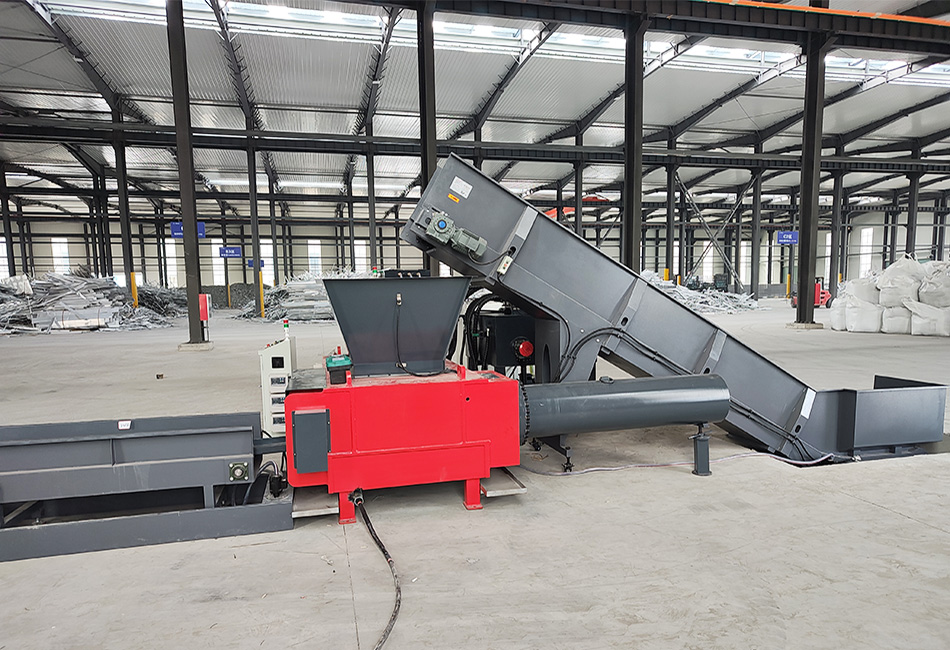
Selecting the right machinery requires understanding the different equipment categories available. Each type serves a specific operational scale and material condition. You must match the machine design to your daily tonnage and labor availability.
Vertical balers fit perfectly in low-to-medium volume operations. They require very little floor space. This makes them ideal for small scrap yards, grocery distribution centers, or municipal drop-off sites. The operational reality involves heavy manual labor. Operators must load the material by hand or with a small cart dumper. They also must tie off the bales manually using 13-gauge or 14-gauge steel wire. This manual tying process takes several minutes per bale, resulting in a lower throughput capacity. You face higher labor costs per ton processed over time.
High-volume material recovery facilities require horizontal systems. These are designed for large-scale recycling centers processing multiple tons per hour. A horizontal UBC baler machine supports continuous feeding. You integrate them directly with in-feed conveyors, allowing loaders to dump material continuously. They feature auto-tie mechanisms that wrap 11-gauge wire around the bale without operator intervention. You achieve massive processing efficiency and high daily tonnage with minimal manual oversight.
Beverage production facilities face a different challenge. They handle rejected, full, or expired product batches. Standard balers cannot process full cans safely. The hydraulic pressure causes cans to burst, spraying sticky liquid across the facility and into the machine's electrical components. Dewatering balers simultaneously crush cans and extract liquids. They feature stainless steel catch pans, splash guards, and dedicated plumbing. They safely drain and route these liquids away from the baling chamber. This specialized metal recycling equipment requires specific drainage infrastructure. You recover the extracted liquid for safe disposal or anaerobic digestion.
Some smelters specifically request tie-less aluminum blocks. Facilities supplying these buyers use briquetting presses. These machines use extreme hydraulic pressure, often exceeding 3,000 PSI. They compress aluminum scrap into dense, self-adhering blocks. The friction and pressure cause the aluminum to bind together. The process eliminates the need for wire or plastic strapping entirely. You eliminate all consumable tying costs. These machines require rigorous high-pressure hydraulic maintenance and advanced cooling systems to perform consistently.
You must evaluate machinery based on strict performance dimensions. Relying on basic specifications is not enough for high-volume operations. You need to dig into the mechanical capabilities of the equipment.
Machine cycle time dictates your maximum hourly capacity. You must evaluate the seconds per stroke against your peak inbound volume. A fast cycle time prevents material backups during busy shifts. You also need to assess the hopper size. The feed opening dimensions must match your conveyor output. If the opening is too small, cans will bridge across the top. Material bridging causes jams and stops production entirely. Proper sizing ensures continuous, fluid operation.
Measure your peak surge volume, not just your daily average.
Verify the main cylinder stroke speed in both extend and retract phases.
Ensure the hopper features an agitator or specific geometry to prevent bridging.
Match the conveyor belt width to the baler feed opening exactly.
Hydraulic pressure determines the final bale density. You must analyze the specific pressure applied by the main cylinders. Look at the cylinder bore size; an 8-inch or 10-inch cylinder delivers significantly more compaction force than a 6-inch cylinder. Higher pressure yields tighter, heavier bales. You need to compare the resulting bale weights against standard transport logistics. The dimensions must fit neatly into standard 40-foot shipping containers or 53-foot trailers. Inconsistent bale sizes waste space and create unstable stacks in your warehouse.
A modern aluminum recycling system must integrate with your existing infrastructure. Assess its compatibility with upstream equipment. It should work seamlessly with magnetic separators and eddy currents to ensure no steel contamination enters the aluminum bale. Evaluate the reliability of the auto-tie systems. Programmable logic controllers (PLCs) are mandatory. They provide real-time diagnostic reporting. Photo-eyes in the hopper communicate with the PLC to trigger the ram automatically when enough material is present.
Procurement decisions involve balancing immediate costs against long-term operational realities. You must weigh these mechanical and operational trade-offs carefully before finalizing a purchase.
Purchasing a manually operated machine saves money upfront. It locks you into high daily labor dependencies. Fully automated systems require a larger initial investment. They offset this by drastically reducing your operational expenses. Energy consumption is another major factor. You must evaluate the efficiency of the hydraulic power unit (HPU). The motor sizing must align perfectly with the expected output. Modern systems use Variable Frequency Drives (VFDs) on the motors. VFDs ramp down power consumption when the machine is idling, saving thousands in electricity costs annually. An efficient aluminum scrap baler optimizes both labor and power.
You must decide if you need a dedicated machine or a dual-purpose unit. Some facilities want their equipment to process tin cans as well. There are strict operational trade-offs here. Steel scrap is much heavier and harder than aluminum. Processing steel in a machine calibrated strictly for aluminum causes premature wear. If you require multi-material flexibility, you need factory upgrades. The machine must feature heavy-duty, serrated shear blades. Reinforced chamber floors are absolutely necessary to handle the abrasive nature of steel.
Aluminum processing creates specific wear patterns on machinery. Aluminum oxide acts like sandpaper inside the compaction chamber. It causes severe abrasive wear on mild steel floors. Shear blades degrade over time and lose their cutting edge. You must identify these high-wear components early. Evaluate the ease of access for your maintenance personnel. They need to replace HARDOX 450 or 500 liners and service hydraulic cylinders safely. Selecting a reliable baler manufacturer is vital. They must have a robust domestic parts inventory. Responsive technical support prevents extended periods of costly downtime.
Maintenance Task | Frequency | Component Focus |
|---|---|---|
Visual Inspection & Debris Clearing | Daily | Hopper, photo-eyes, auto-tie tracks |
Greasing & Lubrication | Weekly | Cylinder trunnions, hinges, wire tier gears |
Shear Blade Inspection | Monthly | Cutting edges, blade gap tolerances |
Hydraulic System Service | Annually | Fluid replacement, suction filters, breather caps |
Installing heavy industrial equipment carries inherent risks. Proper planning and site preparation mitigate these issues before they impact production. You cannot simply drop a machine on the floor and plug it in.
Inadequate floor loading capacity is a major risk. Balers are incredibly heavy and generate intense vibrations during the compaction stroke. Insufficient ceiling height prevents proper conveyor feeds. You must conduct a structural engineering review prior to procurement. Ensure your concrete pad is thick enough, typically requiring 8-inch reinforced concrete. Map out the exact footprint of the machine. Include generous maintenance clearance zones around all access panels. Your technicians need room to pull cylinders and replace heavy wear plates safely.
Underestimating power requirements leads to blown panels and production stops. High-capacity balers require robust 480V 3-phase power. Large 50 HP or 100 HP motors draw massive amperage on startup. High-ambient-temperature facilities pose risks to hydraulic systems. Hydraulic oil loses viscosity if it overheats, reducing compaction pressure. You must verify your electrical panel capacities early. Specify oil coolers or heaters based on your exact installation environment. Maintaining optimal hydraulic fluid temperature ensures consistent performance.
Operator injury is the most severe risk in any recycling facility. Failure to meet local occupational safety standards results in heavy fines and shutdowns. Ensure the equipment includes standard safety interlocks on all access doors. If a door opens, the machine must shut down instantly. Emergency stops must be highly visible and accessible from multiple angles. Implement strict Lockout/Tagout (LOTO) procedures. Demand comprehensive operator training programs from the manufacturer. Proper training prevents accidents and extends the lifespan of the equipment.
Investing in the right aluminum compaction equipment transforms a costly logistical bottleneck into a highly efficient, revenue-generating asset.
Filter your equipment options based on material condition, prioritizing dewatering systems if you process full or expired beverage cans.
Conduct a comprehensive site audit to verify floor load capacities, ceiling heights, and 3-phase electrical availability.
Request physical material testing from the manufacturer using a sample of your facility's specific aluminum scrap.
Establish a preventative maintenance schedule focusing on shear blade rotation and hydraulic fluid analysis.
A: The ideal bale density ranges from 15 to 25 pounds per cubic foot. This density meets standard mill-ready specifications. It allows you to maximize the legal weight limits of standard shipping containers and dry van trailers without wasting space. Smelters prefer this density because it ensures the bales hold together during transit and melt efficiently in the furnace.
A: A standard aluminum bale weighing approximately 1,000 pounds contains roughly 30,000 to 35,000 crushed cans. This estimate varies slightly based on the specific size of the cans and the precise compaction pressure applied by the baling equipment. High-density balers compress cans tighter, slightly altering the total count per cubic foot.
A: A standard machine processes dry, empty cans. A dewatering baler handles full or expired beverage containers. It features specialized liquid extraction mechanisms, corrosion-resistant stainless steel components, and dedicated drainage routing. This setup safely removes and redirects liquids during compaction, preventing severe machine corrosion and maintaining facility hygiene.
A: Industrial units require daily visual inspections and clearing of debris from the chamber. Operators must perform weekly greasing of all moving parts, hinges, and bearings. Annual maintenance involves complete hydraulic fluid changes, filter replacements, and checking the tolerances on the shear blades. You must also inspect wear liners quarterly for abrasive degradation.
A: Some systems are designed for multi-material use, but you must exercise caution. Processing heavier steel or tin in a machine calibrated exclusively for aluminum causes premature abrasive wear. Dual-purpose processing requires specific factory upgrades, including heavy-duty shear blades and reinforced HARDOX chamber floors to withstand the harder material.


 English


