

Views: 0 Author: Site Editor Publish Time: 2026-09-10 Origin: Site


Metal scrap balers are widely used in metal scrap recycling to reduce volume. Depending on the drive system, common balers include mechanical metal balers, pneumatic metal balers and hydraulic metal balers. Among these options, hydraulic metal balers have their distinct advantages.
This article explains what a hydraulic metal baler machine is, how hydraulic compression works, its advantages over other baling systems, and the types of metal scrap it can process.
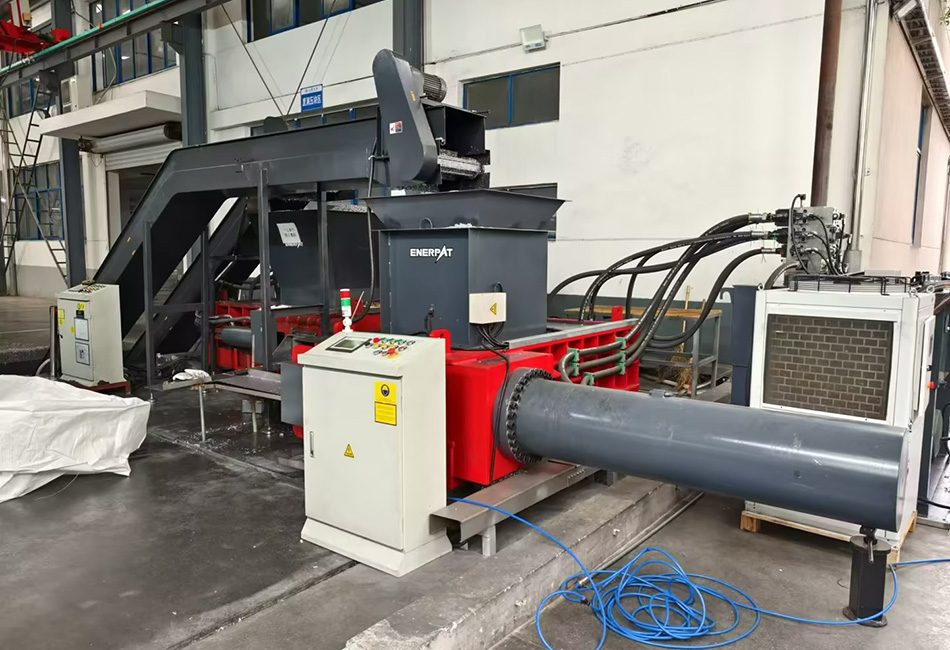
A hydraulic metal baler machine is a type of recycling equipment using a hydraulic system as the source of power to bale metal scrap. Its core components include a hydraulic system, hydraulic cylinders, hydraulic rams and a compression chamber.
The hydraulic system provides and controls the pressure required for compression. Its main components include pumps, valves and cylinders. The pump circulates hydraulic oil through the system, while the valves regulate its flow and direction.
The hydraulic cylinder converts hydraulic pressure into linear motion and mechanical force. Pressurized oil acts on the piston inside the cylinder, causing the piston rod to move and drive the compression ram forward.
The hydraulic rams are the components which transfer the force generated by the hydraulic cylinder to the metal scrap. As the ram advances, it compacts the loose material and reduces the space between individual pieces.
The compression chamber is where the scrap is compacted under high pressure. Loose metal scrap is fed into the chamber, where it is compressed into a dense bale. Once the required density or size is reached, the finished bales are discharged from the chamber.
Now that we've covered what a hydraulic scrap metal baler is and the role it plays in scrap processing, it's worth taking a closer look at the mechanism that makes it work. At the heart of every hydraulic baler lies hydraulic compression. Generally, the process consists of three main steps for turning metal scrap into dense, compact bales.

Once the compacting process is initiated, the hydraulic pump draws hydraulic oil from the reservoir and circulates it through the system. Control valves direct the pressurized fluid toward the cylinders, providing the hydraulic pressure required for compression.
Inside each cylinder, pressurized hydraulic oil enters one side of the cylinder and works on the piston. According to Pascal’s law, the resulting pressure differential moves the piston, thus converting hydraulic pressure into strong linear mechanical force. The piston rod then transfers force to the ram.
The hydraulic ram applies mechanical force directly to the scrap inside the compression chamber. This substantial compression force deforms and compacts metal scrap into a dense, compact bale after this process. Then, metal bales with increased density and reduced volume are discharged for handling, storage or transportation.
In addition to the hydraulic metal baler machine, other types of metal balers like a mechanical metal baler and a pneumatic metal baler can also help with the compacting process. However, each drive system has its own operating characteristics and limitations.
A mechanical metal baler is a conventional type of baling equipment. It relies on a motor-driven transmission system to generate compression force. The drive system includes mainly gears, a flywheel, and a crank or eccentric mechanism, which convert rotary motion into the linear movement of the pressing ram to compress metal scrap. It is suitable for light scrap like cans and thin sheet metal.
However, compared with hydraulic metal balers, the compression force of mechanical balers is less adjustable, which limits their flexibility when scrap varies significantly in size, shape, density, or hardness.
Pneumatic balers use compressed air to actuate the pressing cylinder. The air pressure pushes the piston inside the cylinder, causing the piston rod and pressing ram to move forward and compress the material. Their relatively simple operating system is suitable for light-duty compaction applications, particularly thin and easily compressible materials.
However, pneumatic systems generally provide lower compression force than hydraulic systems, making them less suitable for dense, rigid, or high-hardness metal scrap.
Supported by the powerful hydraulic system and an efficient electronic control system, a hydraulic scrap metal baler combines high compression force with greater control over the baling process.
So, it can accommodate a wider range of metal materials. This makes hydraulic balers particularly suitable for bulky, irregular, and high-hardness metal scrap.
The table below compares several different drive systems used in metal balers. For scrap metal recycling, hydraulic balers are generally preferred when high compression force, controlled operation, and the ability to handle dense or bulky scrap are required.
Baler Type | Hydraulic | Pneumatic | Mechanical |
Power source | Hydraulic system | Compressed air | Mechanical drive |
Compression force | High | Low to medium | Medium to high |
Force control | Precise and adjustable | Moderate | Limited |
Typical use | Heavy-duty metal recycling | Light-duty applications | High-speed, repetitive operations |
Use in scrap metal recycling | Common | Less common | Less common |
Hydraulic vs. Pneumatic vs. Mechanical Metal Baling Systems
The hydraulic press machine for metal scrap is designed to fit various processing conditions. It can handle materials of multiple sizes, shapes and densities. Four major types of metal scrap that it can process are as follows:

A high-hardness scrap places greater demands on pressing force and machine structure. Hydraulic metal balers are designed for processing high-hardness materials, which can treat scrap such as scrap steel, construction rebar, appliance casings, and aluminum extrusions.
Hydraulic metal balers are also capable of converting common metal scrap including copper, iron and stainless steel, into high-density bales. This is especially beneficial for recyclers to cut down the transportation cost.
For loose and mixed metal scrap, such as steel offcuts, steel turnings, iron filings, and copper chips, hydraulic balers offer an efficient solution. These materials typically take up considerable space, and baling significantly reduces their volume for easier handling and storage.
A hydraulic metal baler can be configured to process end-of-life vehicles and vehicle bodies. This kind of industrial waste is known for its large size and structural complexity. However, hydraulic metal balers can be customized to recycle these vehicles.
You can choose a suitable metal baling machine based on the above suggestions. ENERPAT is a reliable hydraulic metal baler manufacturer, providing a variety of hydraulic scrap metal balers designed for different materials and operating conditions.
A: A hydraulic metal baler can handle ferrous and non-ferrous scrap, from loose materials such as metal chips and turnings to bulky, high-hardness scrap such as steel, rebar, and end-of-life vehicles. The suitable machine configuration depends on the scrap's size, shape, density, and hardness.
A: The required pressing force mainly depends on the size, hardness and density of your metal scrap. A hydraulic press machine for metal scrap can adjust to generate the ideal level of pressing force to help you recycle metal scrap more efficiently.
A: Cycle time depends on the baler model, scrap characteristics, bale size, and feeding method. Check the machine specifications for the rated cycle time of a specific model.
A: You can start with the material's size, shape, density, hardness, and other characteristics. The next step is to consider the required pressing force, chamber size, throughput, and feeding method and you can then find out the model of the hydraulic metal baler that best suits your.
A: Sure. Balers can be customized according to the characteristics of metal scrap, the production capacity, available installation space and other concerns. The available options depend on the specific baler model.
The working principle of hydraulic compression gives hydraulic metal balers their high pressing force, adjustability, and broad application range. For those who demand high force and flexible control, hydraulic compression offers a practical solution.
Working with equipment providers experienced in hydraulic press machines for metal scrap like ENERPAT can often help process scrap more effectively and generate consistent returns. Contact ENERPAT to discuss your material, capacity, and bale requirements and find the right solution for your operation.


 English


