

Views: 0 Author: Site Editor Publish Time: 2025-10-31 Origin: Site


Industrial facilities generate significant volumes of waste on a daily basis, ranging from cardboard and paper to plastics, metals, and other recyclable materials. Efficient management of this waste is essential, not only for environmental sustainability but also for cost reduction, workplace safety, and streamlined operations. One of the most effective tools for achieving these objectives is the horizontal baler. These machines are specifically designed to compress large amounts of recyclable materials into compact, manageable bales, drastically improving recycling efficiency across industries.
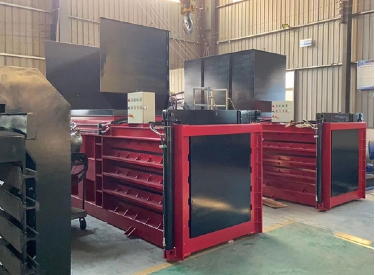
Horizontal balers, also known as in-line balers, operate on a horizontal compression system. Unlike vertical balers, which require materials to be manually loaded from the top, horizontal balers feature a large feed chamber and a hydraulic press that pushes waste materials forward into the compression chamber. This mechanism allows continuous loading and compaction, making horizontal balers ideal for facilities with high waste volumes.
Key components of a horizontal baler include:
Feed Hopper: Allows large quantities of waste to be loaded efficiently.
Hydraulic Press: Compresses the materials into dense bales.
Bale Chamber: Holds the compressed material until it is tied and ejected.
Control Panel: Operates the system safely, often featuring automation options for higher efficiency.
These machines can handle a wide range of materials, including cardboard, paper, plastics, PET bottles, aluminum cans, textiles, and even industrial packaging waste, making them versatile solutions for recycling programs.
Efficient recycling is a cornerstone of modern industrial operations, and horizontal balers play a pivotal role in achieving this goal. These machines are designed to handle large volumes of recyclable materials with minimal labor, maximizing both operational efficiency and environmental impact. Below, we explore the key advantages of horizontal balers in industrial recycling.
One of the most significant advantages of horizontal balers is their ability to process large volumes of waste continuously. In industrial facilities, waste generation is often high and constant. Beverage manufacturers, food processing plants, and large-scale production facilities can produce thousands of kilograms of recyclable materials every day, including cardboard, paper, plastics, and metal packaging.
Vertical balers, while useful in smaller operations, have limited feed openings and operate in batch modes, requiring frequent manual loading and monitoring. In contrast, horizontal balers are engineered for continuous feeding and compression. Materials can be loaded into the feed hopper non-stop, while the hydraulic system compacts them into dense, uniform bales. This continuous operation prevents bottlenecks in recycling workflows and ensures that production lines remain uninterrupted by accumulating waste.
Moreover, continuous operation reduces labor costs because fewer personnel are needed to manage waste handling. Instead of manually compressing or moving materials, operators can focus on overseeing the system and handling other value-added tasks. The ability to maintain a steady flow of processed waste is particularly crucial for high-volume industrial environments where delays can directly affect production efficiency.
Industrial facilities often struggle with limited storage space. Unprocessed recyclable materials can quickly occupy large areas, causing clutter and reducing available space for production or storage. Horizontal balers address this challenge by compressing materials into compact, dense bales. These bales take up significantly less space than loose waste, allowing facilities to store larger quantities in a smaller footprint.
The space efficiency of horizontal balers also translates to logistical advantages. Smaller, more manageable bales are easier to transport to recycling centers or waste management companies, reducing the need for multiple trips and saving time. For facilities in urban areas or constrained industrial zones, optimizing floor space is not just a convenience—it can improve workflow efficiency, reduce workplace hazards, and allow room for additional equipment or operational processes.
Handling loose recyclables manually is labor-intensive and often poses safety risks. Workers may be required to lift heavy materials, bend repeatedly, or move bulky items, increasing the likelihood of musculoskeletal injuries and fatigue. Horizontal balers mitigate these challenges by automating much of the compression process.
Operators simply load materials into the feed hopper, and the baler compresses the waste into uniform bales. Some models even integrate with conveyor systems, allowing automated feeding from production lines. This significantly reduces the need for repetitive manual labor, improving worker safety and productivity. Additionally, minimizing manual handling decreases the chances of accidents or injury associated with moving heavy or awkward materials.
By reducing labor demands, horizontal balers allow industrial facilities to reallocate workforce resources to more strategic tasks, such as quality control, equipment maintenance, or process optimization. The result is not only a safer workplace but also improved operational efficiency and cost-effectiveness.
Horizontal balers produce uniform, dense bales that comply with recycling processor requirements. Consistent bale quality is critical for efficient transportation, storage, and resale of recyclable materials. Inconsistent bales from manual compression or smaller vertical balers can lead to rejected shipments, delays, or reduced market value, impacting both operational efficiency and profitability.
Dense and uniform bales also reduce the risk of breakage during storage and transport. They maintain their shape, keep materials organized, and help maintain clean, safe work environments. For industries managing multiple waste streams, consistent bale quality ensures that materials are handled systematically, reducing errors and inefficiencies.
Industrial recycling often involves diverse types of waste. Horizontal balers are designed for versatility, capable of handling cardboard, paper, plastics, metals, textiles, and other materials. Advanced models feature adjustable hydraulic pressure settings or multi-chamber configurations to accommodate different densities and sizes of materials.
This versatility allows facilities to consolidate multiple recycling streams into a single machine, reducing equipment costs and simplifying operations. A single horizontal baler can replace multiple vertical or specialized machines, making it an economically efficient choice for industrial recycling. Additionally, the ability to process mixed materials efficiently encourages more robust waste reduction practices and promotes sustainability initiatives within the organization.
Beyond operational advantages, horizontal balers contribute significantly to environmental sustainability:
Reduced Transportation Impact: Compact bales require fewer trips to recycling centers, lowering fuel consumption and greenhouse gas emissions.
Waste Diversion: Efficient compaction encourages higher recycling rates by making it easier to store and transport materials.
Resource Conservation: Recycling helps conserve raw materials and reduces the reliance on virgin resources, lowering the environmental footprint of industrial operations.
By enabling facilities to manage waste more efficiently, horizontal balers also support corporate social responsibility (CSR) goals and strengthen environmental stewardship.
Recycling is more than just an operational priority—it’s an environmental responsibility. Horizontal balers contribute significantly to sustainability efforts:
Reduced Transportation Impact: Dense bales require fewer trips to recycling centers, lowering fuel consumption and greenhouse gas emissions.
Waste Diversion: Efficient compaction encourages higher recycling rates by making it easier to store and transport materials.
Resource Conservation: By facilitating recycling, these machines help conserve raw materials and reduce the need for virgin resources.
Additionally, the ability to handle high volumes of recyclable materials encourages companies to implement stronger waste reduction policies, contributing to corporate social responsibility goals and improving brand reputation.
Horizontal balers can be seamlessly integrated into existing industrial operations. Facilities often place them near production lines or waste generation points to allow direct feeding of materials, reducing the need to transport waste across the facility. Advanced systems can also be automated with conveyor belts or feed hoppers, minimizing manual intervention and streamlining the recycling workflow.
Integration benefits include:
Improved workflow: Waste is removed efficiently, preventing clutter and operational bottlenecks.
Time savings: Direct feeding reduces material handling steps.
Enhanced safety: Less manual movement of bulky items reduces workplace hazards.
Some modern horizontal balers even incorporate sensors that automatically detect material type and density, optimizing the compression cycle for each batch.
Industrial balers are equipped with safety interlocks, emergency stop buttons, and protective guards to prevent accidents. Many models comply with OSHA and local safety standards, ensuring that recycling operations do not compromise worker safety. Proper training on machine use and regular maintenance are essential to prevent injuries and maintain compliance.
Other safety features include:
Light curtains or sensors to stop operation when personnel enter hazardous zones.
Lockout/tagout capabilities for safe maintenance.
Alarm systems for hydraulic or mechanical malfunctions.
To ensure long-term performance, regular maintenance is essential. Horizontal balers require:
Hydraulic System Checks: Monitoring fluid levels and pressures to prevent breakdowns.
Component Inspection: Regularly checking cylinders, rams, and electrical components.
Cleaning and Lubrication: Keeping the machine free from debris and ensuring smooth operation.
Proper maintenance not only extends machine lifespan but also maintains consistent bale quality, reduces energy consumption, and avoids costly downtime.
Horizontal balers are transformative tools for industrial recycling. They offer high throughput, consistent bale quality, labor savings, environmental benefits, and operational efficiency, making them indispensable for facilities that prioritize sustainability and cost-effectiveness. By integrating a horizontal baler into a recycling program, industrial operations can streamline waste management, improve worker safety, and enhance profitability while contributing to a greener future.
For more information on high-quality horizontal balers and solutions tailored for industrial facilities, visit www.kinboxtools.com or contact www.kinboxtools.com Their expert team can help identify the right baler for your operational needs and provide ongoing support to maximize recycling efficiency.


 English


