

Views: 0 Author: Site Editor Publish Time: 2025-09-24 Origin: Site


A horizontal baler is a powerful waste management machine designed to efficiently compress and bundle large volumes of recyclable and industrial materials into compact, uniform bales. By transforming loose waste into manageable bales, horizontal balers streamline material handling, reduce storage space requirements, and simplify transportation. They are widely used across industries such as recycling centers, manufacturing facilities, warehouses, and logistics operations to optimize workflow and improve operational efficiency.
The closed end horizontal baler takes these benefits a step further by providing enhanced stability and safety during operation. Unlike traditional open-end balers, closed end models feature a fully enclosed compression chamber that ensures materials are tightly contained during the baling process. This design not only produces denser and more uniform bales but also minimizes risks associated with loose or shifting materials. In industrial and commercial settings, closed end horizontal balers are particularly valuable for handling high volumes of cardboard, plastics, paper, and other recyclable or scrap materials efficiently, helping businesses save time, reduce costs, and support sustainable waste management practices.
One of the main advantages of a closed end horizontal baler is its ability to process large volumes of materials continuously. Whether handling cardboard, paper, plastics, textiles, or industrial waste, these balers can operate 24/7 in high-demand settings without significant downtime. The horizontal compression chamber is designed to accommodate bulk materials efficiently, ensuring that each bale is compact and uniform.
This continuous operation is particularly beneficial for facilities with high waste generation, such as recycling centers processing tons of cardboard per day or manufacturing plants dealing with scrap materials from production lines. By maintaining consistent throughput, businesses can maximize operational efficiency and minimize material backlog.
Modern closed end horizontal balers feature automated feeding, compression, and bale tying systems, which drastically reduce manual labor requirements. Materials can be loaded via conveyor systems, automatically compressed by hydraulic rams, and tied with high-strength wire or strapping without constant operator intervention. This automation not only reduces workforce costs but also minimizes the risk of workplace injuries associated with handling heavy or bulky materials.
By streamlining the baling process, employees are free to focus on other value-added tasks, enhancing overall productivity and improving workflow across the facility. The integration of Siemens or Schneider PLC control systems in many machines allows operators to monitor and adjust the baling cycle, compression force, and bale size, further optimizing performance.
A closed end horizontal baler produces uniform, dense bales that are easier to transport, stack, and store. Unlike manual compression methods or open-end balers, the closed end chamber ensures that material remains contained during compression, resulting in bales that retain their shape and structural integrity throughout handling and transit. This consistency is crucial for logistics efficiency, as uniform bales can be easily stacked and loaded onto trucks or containers without shifting or collapsing.
Another key feature of closed end horizontal balers is the ability to customize bale sizes. Facilities can adjust both the length and width of the bales to meet specific storage, transportation, or customer requirements. For instance, large warehouses may opt for compact bales to maximize space utilization, while recycling centers may produce standard-size bales suitable for shipment to processing plants. This flexibility ensures that businesses can tailor operations to their unique logistics needs.
The hydraulic compression system in closed end horizontal balers is designed to deliver consistent pressure across the entire bale. Triple-action hydraulic cylinders often provide compression from multiple directions, ensuring that even irregularly shaped or bulky materials are compacted effectively. This reliable compression not only improves storage density but also enhances the aesthetic quality of the bales, making them easier to handle and resale-ready for recycling purposes.
One of the most tangible benefits of a closed end horizontal baler is its ability to significantly reduce the volume of recyclable or waste materials. Loose cardboard, paper, plastics, or industrial scrap often occupy substantial warehouse or storage space, complicating material handling and logistics. By compressing these materials into dense bales, businesses can maximize available floor space and maintain a more organized, clutter-free facility.
Closed end horizontal balers produce neatly shaped, stable bales that are easy to stack and store. Facilities can efficiently organize bales in designated storage areas, improving inventory management and optimizing vertical and horizontal space utilization. This space optimization is particularly valuable in warehousing, logistics centers, and recycling facilities, where maximizing storage capacity is essential for operational efficiency.
Optimized storage translates into smoother material flow and reduced time spent moving or handling loose materials. Employees can access, transport, and process bales more efficiently, leading to faster turnaround times and improved workflow. Additionally, the ability to stack bales safely reduces congestion and minimizes the risk of workplace accidents.
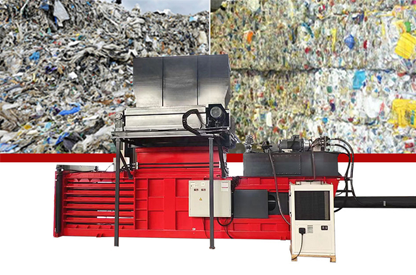
Closed end horizontal balers directly contribute to reducing transportation costs. Dense bales occupy significantly less space than loose materials, allowing trucks and containers to carry more material per trip. Fewer trips mean reduced fuel consumption, lower vehicle maintenance expenses, and decreased overall logistics costs, which is particularly important for facilities shipping materials to recycling plants or customers.
Automation in bale feeding, compression, and tying reduces the need for manual labor, lowering associated labor costs and minimizing the risk of injuries. Employees no longer need to handle loose or bulky materials repeatedly, which streamlines operations and enhances workplace safety. Facilities can reallocate labor resources to other critical areas, improving overall productivity.
By compressing materials consistently and producing bales ready for transport, closed end horizontal balers save valuable time in material handling. Faster processing and easier transportation of compact bales improve workflow and reduce downtime, translating into long-term cost savings. Companies benefit not only from direct financial advantages but also from enhanced operational reliability and efficiency.
Closed end horizontal balers are engineered with multiple safety systems to protect operators and equipment. Features such as emergency stop buttons, interlocks, overload protection, and power cut-offs ensure that the machine can be quickly shut down in emergencies, minimizing the risk of accidents. These safety mechanisms are essential in industrial environments where large, heavy, or sharp materials are frequently handled.
High-quality materials, reinforced steel frames, and robust hydraulic components ensure that closed end horizontal balers deliver long-lasting, reliable performance. Durable construction reduces maintenance needs, extends equipment lifespan, and supports continuous operation in demanding industrial environments. The combination of strength and reliability allows facilities to maintain high production rates without worrying about frequent breakdowns.
By combining automation, enclosed compression chambers, and safety interlocks, these balers minimize hazards associated with manual material handling. Operators are protected from moving parts, heavy bales, and unpredictable material shifts, while automated bale tying and ejection further reduce the risk of injury. The result is a safer work environment and greater confidence in daily operations.
Closed end horizontal balers promote efficient recycling practices by converting loose waste into compact, transportable bales. Cardboard, plastics, paper, and textile materials can be easily transported to recycling facilities, reducing landfill usage and supporting the circular economy. Consistent bale quality also ensures that recyclables meet the standards required by downstream processing facilities.
By minimizing the number of transport trips required and optimizing space, closed end horizontal balers lower fuel consumption and associated greenhouse gas emissions. Efficient waste handling and transportation contribute to a smaller carbon footprint, making these balers an environmentally responsible solution for businesses aiming to meet sustainability goals.
Many industries are subject to environmental regulations regarding waste management and recycling. Using a closed end horizontal baler helps companies comply with local, regional, and international standards by ensuring organized, controlled, and efficient material handling. This reduces environmental risk while enhancing corporate social responsibility initiatives.
Closed end horizontal balers are highly versatile machines that can handle a wide range of materials, making them suitable for multiple industries. They are widely used in:
Recycling Centers: Preparing materials like cardboard, plastics, and paper for resale or further processing.
Warehousing and Logistics: Optimizing storage and organizing recyclable materials.
Manufacturing Facilities: Handling scrap, packaging waste, and production byproducts efficiently.
Retail and E-commerce: Compressing packaging waste from shipments, returns, and product handling.
Hospitality and Food Services: Managing cardboard and packaging from deliveries and consumables.
Textile and Apparel Industry: Compressing offcuts, scraps, and used fabrics for recycling.
Plastic and Beverage Industry: Efficiently handling PET/HDPE bottles, films, and flexible packaging.
This versatility ensures that businesses across different sectors can maximize operational efficiency and achieve consistent waste management results.
The closed end horizontal baler is a critical investment for businesses seeking to improve waste management, recycling efficiency, and operational productivity. By providing high efficiency, consistent bale quality, space optimization, cost reduction, enhanced safety, and environmental benefits, this machine addresses the core challenges faced by modern industrial and commercial facilities.
Its automation and robust design reduce manual labor, minimize workplace hazards, and deliver long-term reliability. With the ability to handle a wide variety of materials, closed end horizontal balers are indispensable in recycling centers, manufacturing plants, warehouses, and other high-volume waste processing environments.
For companies looking to streamline recycling operations, save costs, and enhance sustainability, investing in a closed end horizontal baler ensures superior performance and measurable benefits. Businesses are encouraged to contact ENERPAT for professional guidance, tailored solutions, and expert advice on selecting the right baler model for their specific operational needs. By doing so, facilities can achieve safe, efficient, and environmentally responsible waste management while maximizing productivity and cost savings.


 English

